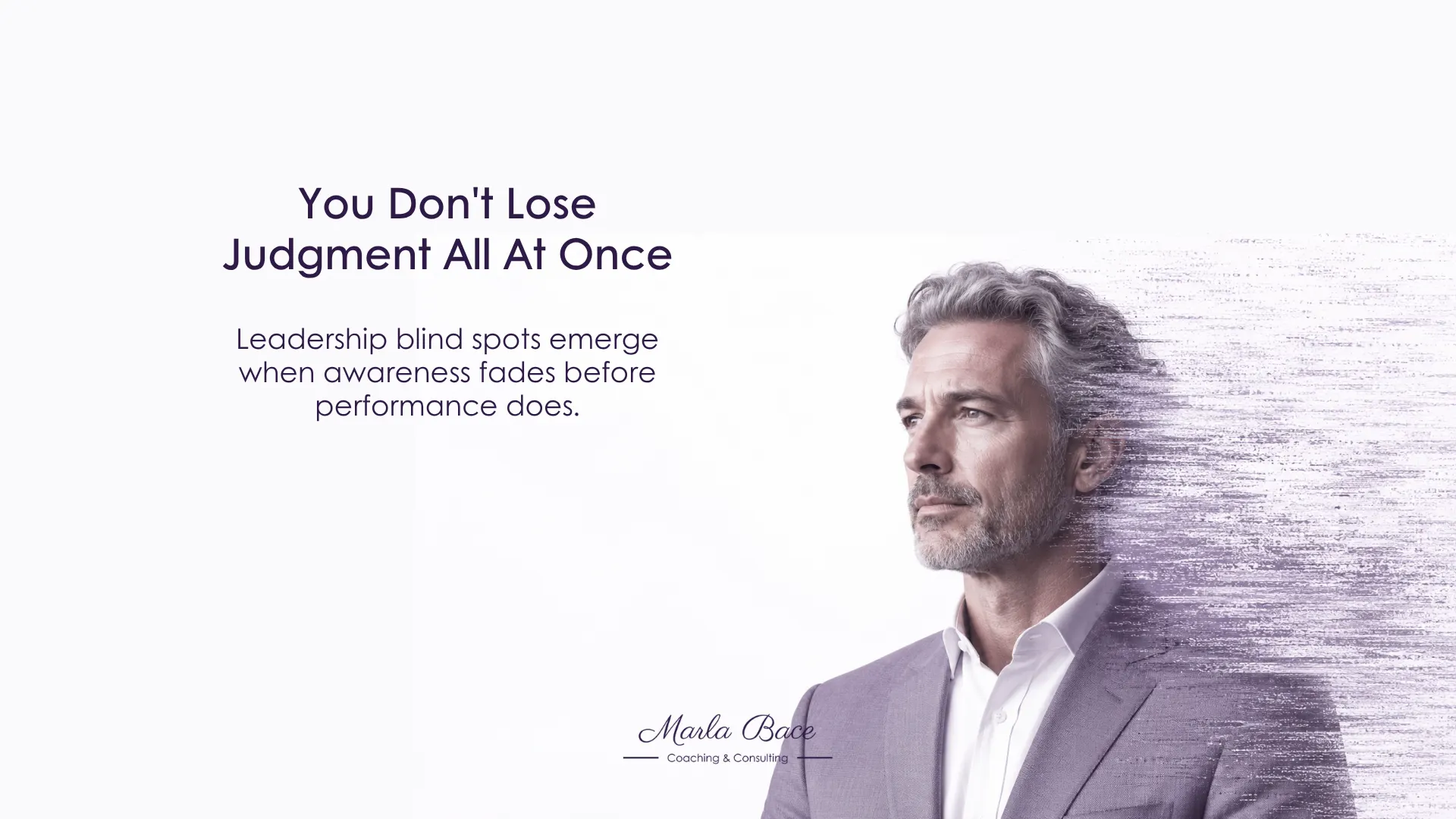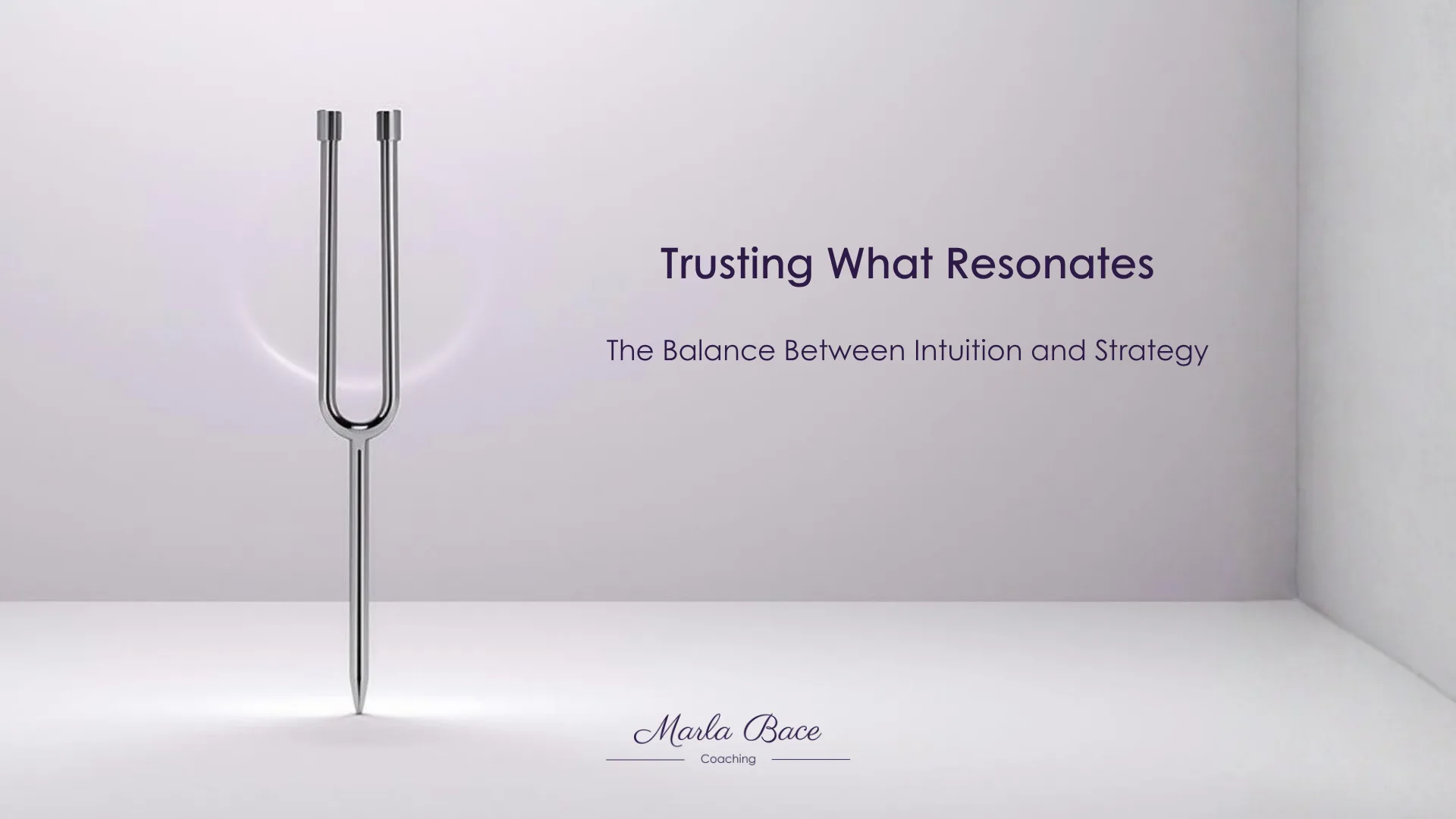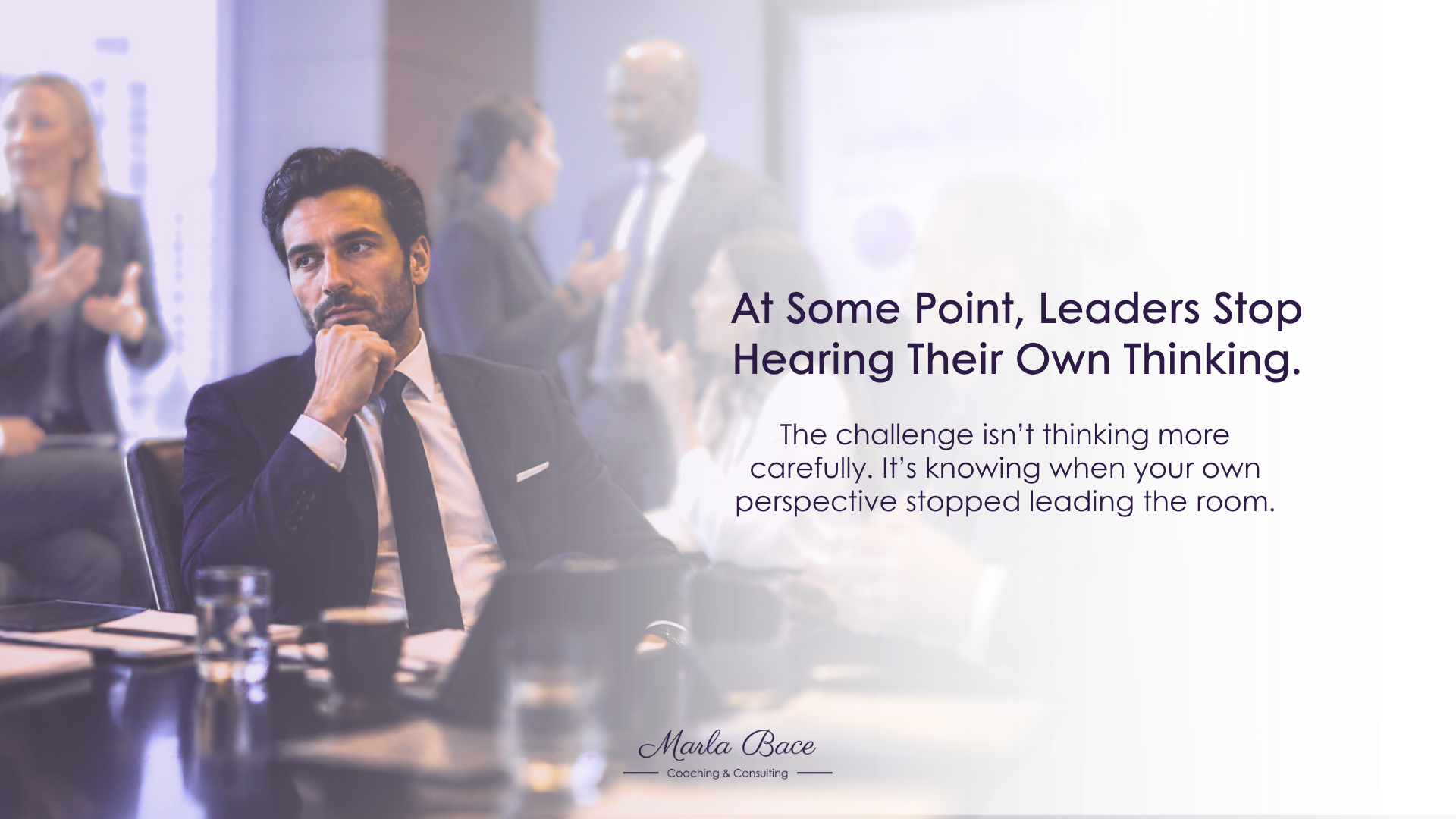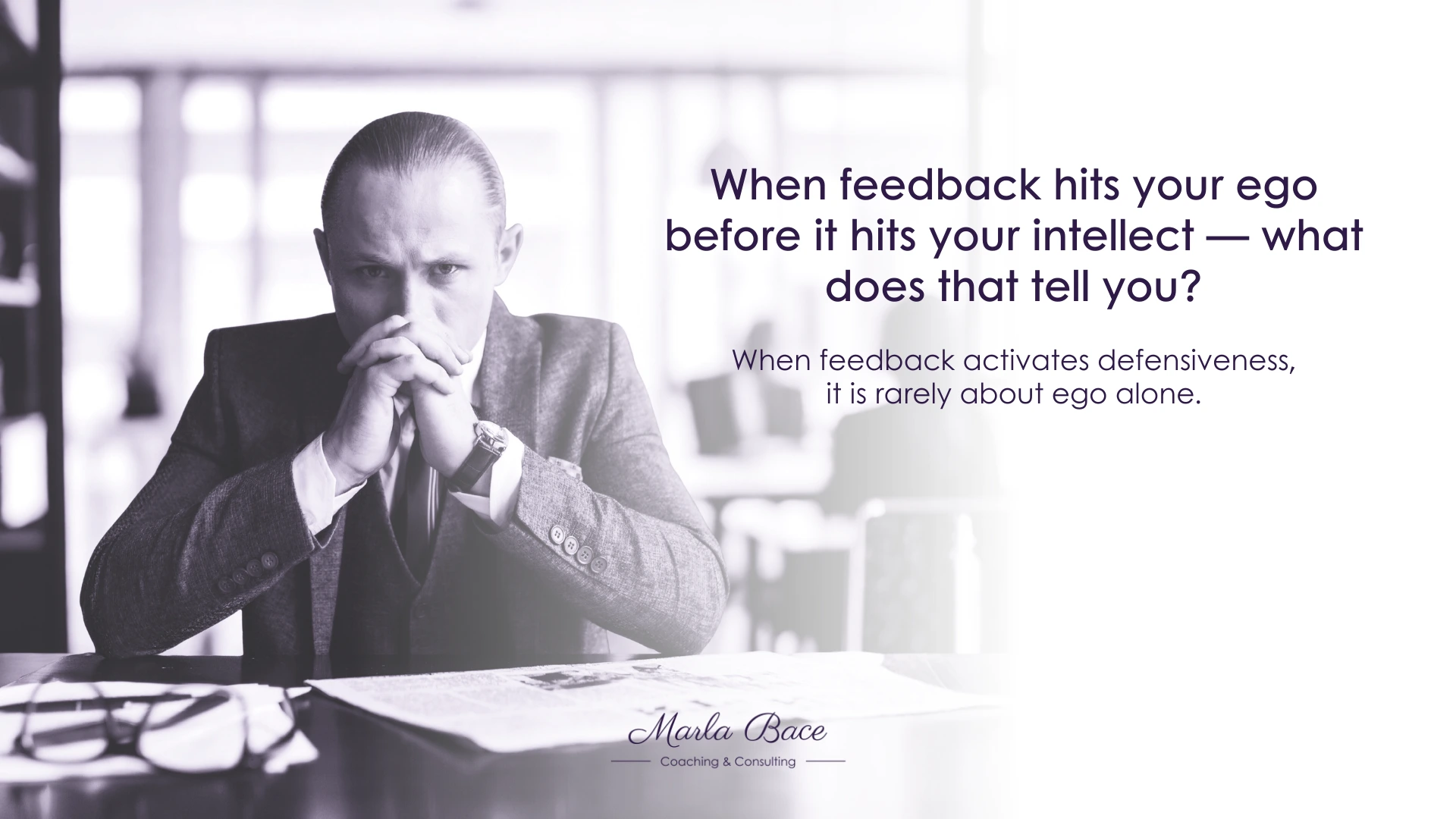
Leadership intuition is often the early recognition of patterns, tensions, or risks that have not yet become obvious through data alone. Most senior managers are conditioned to override these signals unless they can immediately justify them. The problem is that ignoring intuition can cause leaders to miss important information about people, organizational dynamics, and emerging challenges. Effective leadership is not about choosing intuition over strategy—it is about knowing when intuition is pointing toward something that deserves closer attention.
Intuition in leadership isn’t about instincts, it is about recognizing patterns early enough to make better decisions.
What Leadership Intuition Really Is
Have you ever known, quietly, unmistakably, that something wasn’t aligned, and chosen to push forward anyway?
Most leaders have. And most pay for it later.
Urgency Disguised as Confidence
There is a critical difference between patience and avoidance. Just as there is a difference between decisive leadership and forcing an outcome because you’re tired of waiting. One is grounded in clarity. The other is driven by urgency disguised as confidence.
Leadership intuition often appears long before leaders can fully explain what they are noticing.
The Cost of Overriding Quiet Knowing
I’ve learned, more than once, that when leaders override intuition in the name of speed, control, or convenience, the cost is rarely just logistical. It shows up in time, money, energy, trust—and often much later, when the consequences are harder to unwind.
This past year offered me a very clear, very personal reminder of that truth.
Why Leaders Stop Trusting Leadership Intuition
After fifteen months of being displaced from my home due to Hurricane Helene, I finally reached the moment I had been waiting for. The contractors were starting my home remediation. The materials were in. The schedules were “set.” I was told—confidently—that everything could be completed within two months, as promised.
On paper, it sounded reasonable.
Emotionally, I wanted it to be true.
Intuitively, with each weekly check-in, something felt off.
The Subtle Signs We Explain Away
As the first month unfolded, the signs started stacking up.
Subcontractors didn’t show up when scheduled.
Deliverables slipped quietly, then repeatedly.
Conversations became more reassuring than specific.
Nothing catastrophic—just enough friction to notice if you were paying attention.
And I was.
The Moment Stillness Spoke Clearly
I remember sitting alone one evening, not trying to solve anything, not drafting emails or making calls—just sitting quietly and asking myself a simple question:
Should I push for the original timeline, or move this out until after the holidays, into the New Year?
The answer came quickly. And it wasn’t subtle.
Push it out.
Not because it was convenient—it wasn’t.
Not because it was cheaper—it wasn’t.
But because forcing this timeline felt misaligned with reality.
So I did what leaders often struggle to do: I paused long enough to listen to myself.
When I raised the possibility with the contractors, I was direct and transparent. I acknowledged that delaying would cost them money—additional lodging for me, extended storage for my belongings, and more coordination on their end—but I wasn’t posturing or threatening. I was opening the door for an honest conversation about feasibility.
Strong leadership intuition does not replace analysis. It helps leaders identify what deserves closer attention.
Leadership Intuition and Strategic Decision-Making
Their response?
“We’ll be done.”
Not “here are the risks.”
Or “here’s where we’re tight.”
Not “let’s talk through tradeoffs.”
Just certainty.
And here’s where the real lesson begins.
The Moment I Didn’t Listen to Myself
Because despite my intuition—despite the signs—I chose to override my own knowing and trust the promise instead. I wanted to believe that effort could compensate for structural issues. That urgency could outpace capacity. That pushing harder would somehow bend reality.
It didn’t.
The Difference Between Leadership Intuition and Fear
Not only were they not done on time, but the rushing to finish created new problems. Work that had already been completed now needs to be redone. Quality suffered. Too much was delegated without sufficient supervision. And the net result is that I’m displaced longer than I would have been had I listened to myself in the first place.
The irony is hard to miss.
If I had honored my intuition, I would still have faced inconvenience—but far less of it.
By slowing the timeline, I could have ensured the work was done correctly the first time.
Had we paused, we could have had an honest conversation about constraints rather than managing the fallout from unrealistic promises.
This Is Not a Contractor Story
This is a leadership story.
Because the same pattern shows up every day in business.
Leaders sense misalignment but override it to keep momentum.
Executives see warning signs, but push forward to hit arbitrary deadlines.
Founders feel something isn’t ready, but launch anyway because waiting feels like failure.
And then they act surprised when the outcome doesn’t hold.
Intuition Is Pattern Recognition, Not Instinct
Intuition is not mystical. It is not “woo woo.” It’s not soft. It’s not unprofessional.
Intuition is pattern recognition informed by experience, awareness, and presence. It is your higher power watching out for you.
When you are quiet enough to listen, you get what you need to make better decisions—not perfect ones, but cleaner ones.
Why Stillness Feels So Uncomfortable for High Performers
The problem is that stillness is uncomfortable for high performers. Silence feels like stagnation. Pausing feels like losing control. And asking hard questions feels riskier than pushing through. And it is still hard when you do and receive the answer you really DO NOT want to hear. I am human too.
But here’s what I see repeatedly in my work with leaders and organizations:
The cost of ignoring intuition is almost always higher than the cost of listening to it.
In business, this shows up as:
- Teams rushing execution without addressing misalignment
- Leaders forcing timelines that outpace capability
- Decisions made to relieve pressure rather than create clarity
When you don’t slow down to address the truth early, you end up dealing with it later—usually at a much higher price.
In my situation, the truth was available from the start. The delays. The missed commitments. The subtle but consistent signals that the pace was unsustainable. My intuition wasn’t predicting failure; it was highlighting friction.
And friction is information.
What I’ve learned—again—is that intuition doesn’t ask you to abandon logic. It asks you to integrate it with awareness.
When leaders ignore that integration, they often default to control. They push harder instead of listening deeper. They manage optics instead of reality. And they trade short-term reassurance for long-term consequences.
There were several moments where a different conversation could have happened. One rooted in honesty instead of optimism. One where we could have said:
If we rush, quality will suffer.
Costs shift, but outcomes improve, if we slow down.
If we pretend this is fine, we’ll pay for it later.
That conversation never happened because the pace didn’t allow for it.
Speed Compresses Truth
And that’s the real danger of moving too fast.
Speed doesn’t just compress timelines; it compresses truth.
When you slow down, you create space for better questions.
You invite clarity instead of chaos, when you pause.
When you listen, you lead from alignment rather than force.
Developing Leadership Intuition Without Ignoring Data
If there’s one takeaway I would offer leaders from this experience, it’s this:
Stillness is not inactivity. It is a strategic advantage.
In moments of uncertainty, the quiet voice inside you is often the most informed one in the room. But it requires courage to trust, especially when others sound confident and decisive.
Leading From Alignment Instead of Force
Leadership isn’t about always pushing forward. Sometimes it’s about knowing when not to.
Had I listened fully the first time, the outcome would not have been perfect, but it would have been cleaner, calmer, and far less costly.
And that’s the difference between reacting and leading.
The quiet doesn’t remove obstacles.
It reveals them.
And when you permit yourself to listen to the signs, the synchronicities, the subtle discomfort—you make decisions that hold up over time.
Not because they were fast.
But because they were true.
If there is a decision, situation, or leadership challenge that continues to linger in the back of your mind despite all the analysis, it may be worth exploring why.
A Clarity Review helps uncover the patterns, dynamics, and contextual signals that your intuition may already be noticing so you can move forward with greater confidence and discernment.
The Clarity Review was designed for exactly this kind of decision point.
A short, focused session to help you see what’s yours to carry—and what isn’t.
Frequently Asked Questions
Leadership intuition is the ability to recognize patterns, inconsistencies, opportunities, or risks before they are fully visible through traditional analysis. It is often based on accumulated experience, observation, and contextual awareness.
Many leaders have been trained to prioritize measurable evidence and logical reasoning. As a result, they may dismiss intuitive insights because they cannot immediately explain or defend them, even when those insights prove accurate.
Yes. Intuition can help leaders identify issues worth investigating and questions worth asking. When combined with sound analysis, it can improve decision quality and help leaders respond to complexity more effectively.
Fear tends to focus on avoidance, protection, or worst-case scenarios. Intuition often presents as a persistent signal that something deserves attention. The key is not to react automatically but to examine what the signal may be revealing.
Leaders may overlook important dynamics, delay necessary conversations, or continue pursuing strategies that no longer fit the situation. Over time, this can weaken decision-making and reduce their ability to respond effectively to changing circumstances.