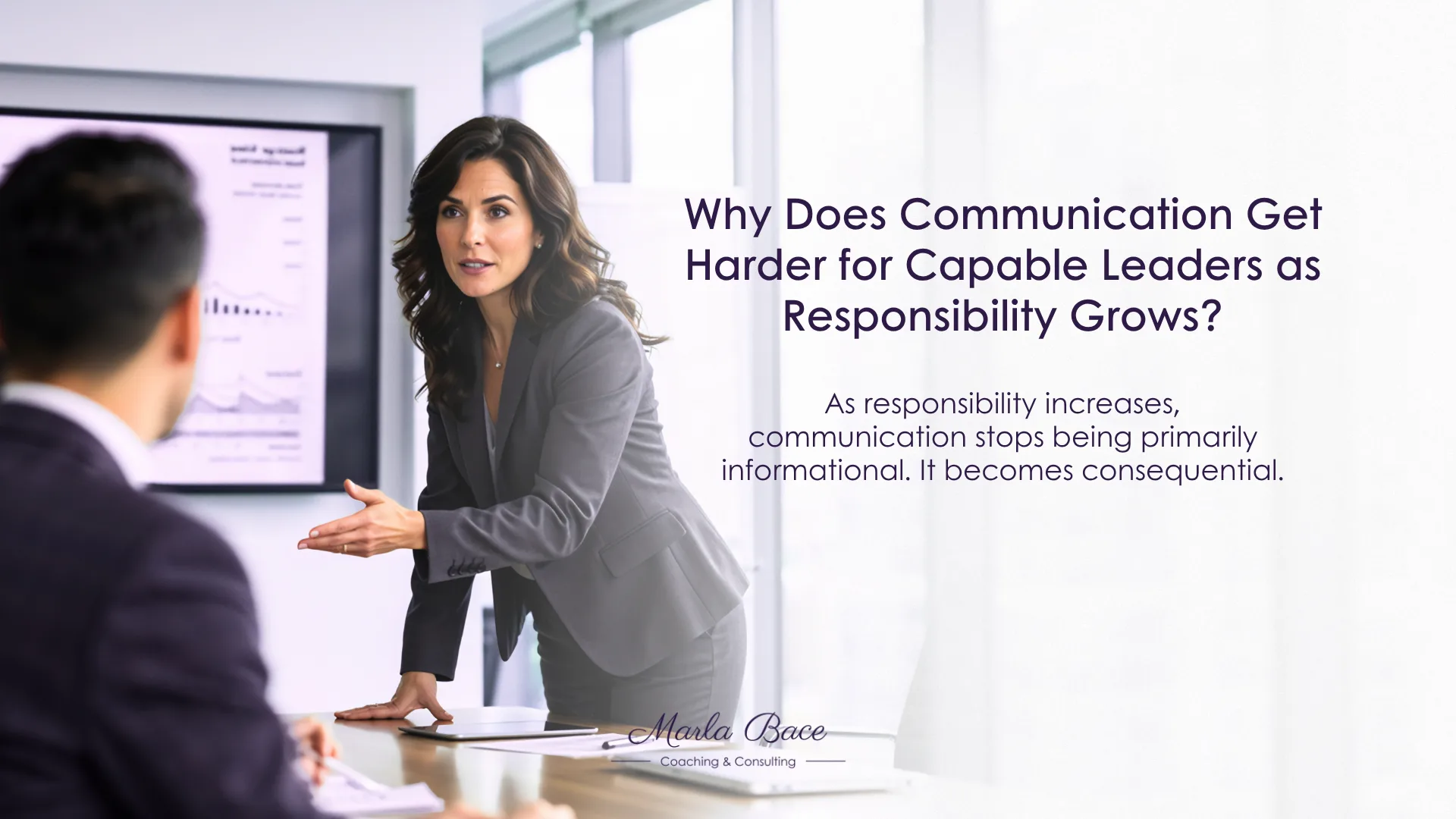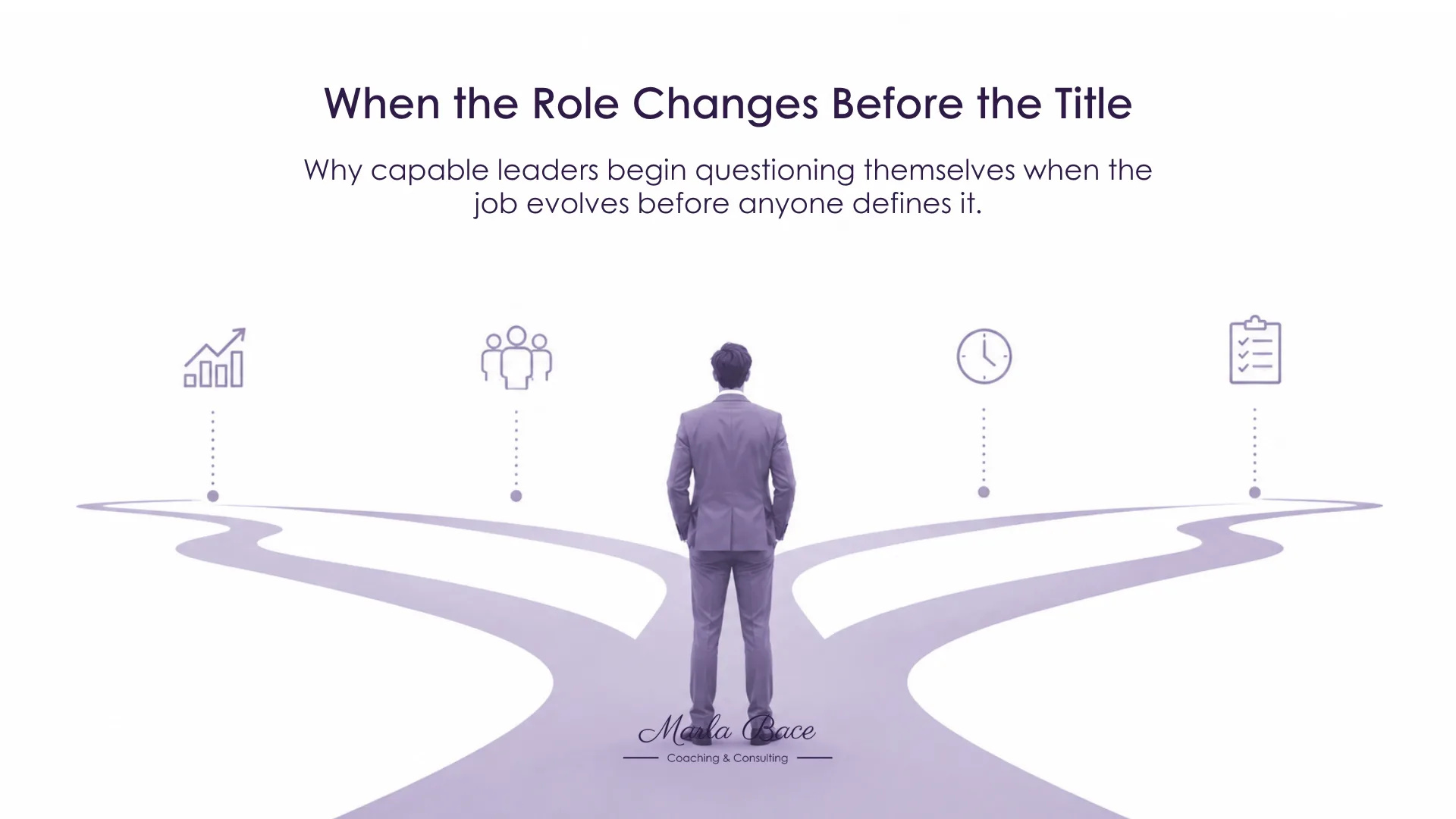
Understanding the Psychology Behind Managing Up and Leadership Communication
Managing up becomes most relevant when emerging leaders experience friction with their manager and assume it is about performance. They look at results, effort, and preparation. They ask whether they are doing enough, anticipating enough, or proving themselves clearly enough.
But in many of the leadership conversations I am having right now, performance is not the issue.
The tension shows up even when the work is strong. Deadlines are met. Thinking is solid. Accountability is clear. And yet the dynamic feels strained. Decisions that seemed settled are revisited. Progress slows. Oversight increases, not because something is broken, but because managers keep returning their attention to details they believe they have already addressed.
This is the moment many emerging leaders quietly ask different questions.
Why am I being second-guessed?
Why is my manager back in the details?
I thought we made a decision. Why are we discussing this again?
When this happens, the more helpful question is not, “What am I doing wrong?”
It is, “What might my manager be perceiving right now?”
Managing up effectively requires understanding the psychology on both sides of the relationship. It means recognizing how pressure, responsibility, and risk shape managerial behavior, and how your communication may be unintentionally amplifying their need to stay close to the work.
Why does your manager’s behavior often have little to do with you?
Most managers are not reacting to your intent. They are reacting to what they believe is at stake.
Senior leaders carry accountability that is often invisible to those below them. They are responsible not only for outcomes, but for explaining, defending, and helping the organization absorb decisions. Their behavior is shaped by exposure.
When the stakes rise, perception matters more.
Pressure heightens managers’ sensitivity to risk signals. When emerging leaders recognize this, they interpret these reactions as protective rather than personal.
This is why two capable people can experience the same situation very differently.
You may experience your communication as helpful and thorough. Your manager may experience it as adding complexity to an already exposed decision.
What are managers unconsciously scanning for in leadership communication?
In moments of uncertainty, managers are rarely asking whether you are smart enough or committed enough. Instead, they are scanning for specific cues such as clarity of decisions, understanding of risks, and the ability to explain their thinking upward, which help them feel oriented and reduce their own uncertainty.
They are listening for answers to questions such as:
- Do I clearly understand the decision being proposed?
- Do I know where the risk lives if this goes wrong?
- Can I explain this thinking upward if I need to?
When those cues are not immediately clear, anxiety increases. Oversight tightens. Questions multiply.
This is not micromanagement by default. It is a nervous system response to perceived ambiguity.
How your communication may be contributing without you realizing it
Emerging leaders often contribute to this tension unintentionally through their communication under pressure.
In one recent example, an emerging leader was deeply invested in demonstrating readiness. Their updates were thoughtful, detailed, and comprehensive. They wanted to show they were thinking several steps ahead.
What she did not realize was that her manager found those updates cognitively taxing. The core decision was buried beneath context. Risk was implied but not named. The result was more questions, not more trust.
In another case, my client believed they were managing their division effectively. He made changes that held weight and impact; he moved quickly to recommendations and framed them with confidence. From his perspective, he was reducing his manager’s workload.
From his manager’s perspective, the speed felt disconcerting. The decision appeared narrowed before shared alignment had been established. What my client experienced as leadership, their manager experienced as pressure.
Neither client was wrong.
Both were skilled, well-intended, and both are excellent at their work. And both were unknowingly amplifying uncertainty through communication patterns that did not align with their managers’ needs at that moment.
Presence is shaped by psychology, not personality.
Presence is often misunderstood as a trait. In reality, it is a response others have to how safe and usable your thinking feels.
Your presence in the room depends on whether your communication helps others orient themselves. When your manager quickly grasps what matters, what is open, and what you are holding, your presence feels steady.
When they cannot, your presence can feel destabilizing, regardless of how confident or capable you are.
This is why the way you communicate directly shapes how others perceive you, even when everything else remains the same.
Shifting communication to change the dynamic
Managing up is not about adapting yourself to your manager’s personality. It is about reducing unnecessary uncertainty.
Small shifts in communication can have an outsized impact:
- Slowing the moment before moving to recommendations
- Making risk explicit instead of implied
- Distinguishing what is decided from what is still exploratory
These shifts help your manager feel less exposed. When exposure decreases, trust increases.
Over time, this changes the tone of the relationship. Questions become more strategic. Oversight becomes more targeted. Influence expands without force.
Why managing up is a critical skill for emerging leaders
As responsibility grows, so does sensitivity to how judgment is communicated.
The leaders who advance are not those who push hardest or explain most. They are the ones who make decision-making easier for those above them.
They understand that managing up is not about managing people. It is about managing perception of risk through clear, intentional communication.
Final reflection
If your manager is reacting in ways that feel confusing or constraining, pause before assuming misalignment or mistrust.
Ask instead what they may be perceiving, what pressure they may be carrying, and how your communication is landing under those conditions.
When you change how you communicate, you change how safe it feels to rely on you.
That is the psychology behind managing up, and it is one of the most underdeveloped leadership skills among otherwise capable professionals.
FAQ
Managing up is the practice of communicating in ways that help your manager clearly understand your decisions, reasoning, and the associated risks. Effective managing up reduces uncertainty and makes it easier for your manager to trust your thinking and represent your decisions confidently to others. It strengthens trust, increases autonomy, and supports your growth as a leader.
Managing up becomes especially important when your manager questions your decisions because their questions are often driven by perceived risk, not lack of confidence in you. When your communication makes your decision, reasoning, and risk clear, it reduces their sense of exposure. This builds trust and allows them to step back rather than move closer into the details.
You can improve your managing up skills by communicating your decisions clearly, naming potential risks directly, and distinguishing between what has been decided and what is still being explored. This helps your manager quickly orient themselves and reduces the need for additional oversight. Over time, this strengthens your leadership presence and increases the trust placed in you.
No. Managing up is not about controlling your manager or trying to influence them for personal gain. It is about improving clarity and reducing uncertainty in your communication so your manager can rely on your thinking. Effective managing up supports both your success and the success of the broader organization.
If this reflection resonates, I explore these dynamics regularly in my newsletter, which focuses on leadership psychology, communication, and presence in high-stakes environments.
You are welcome to join the conversation by subscribing.