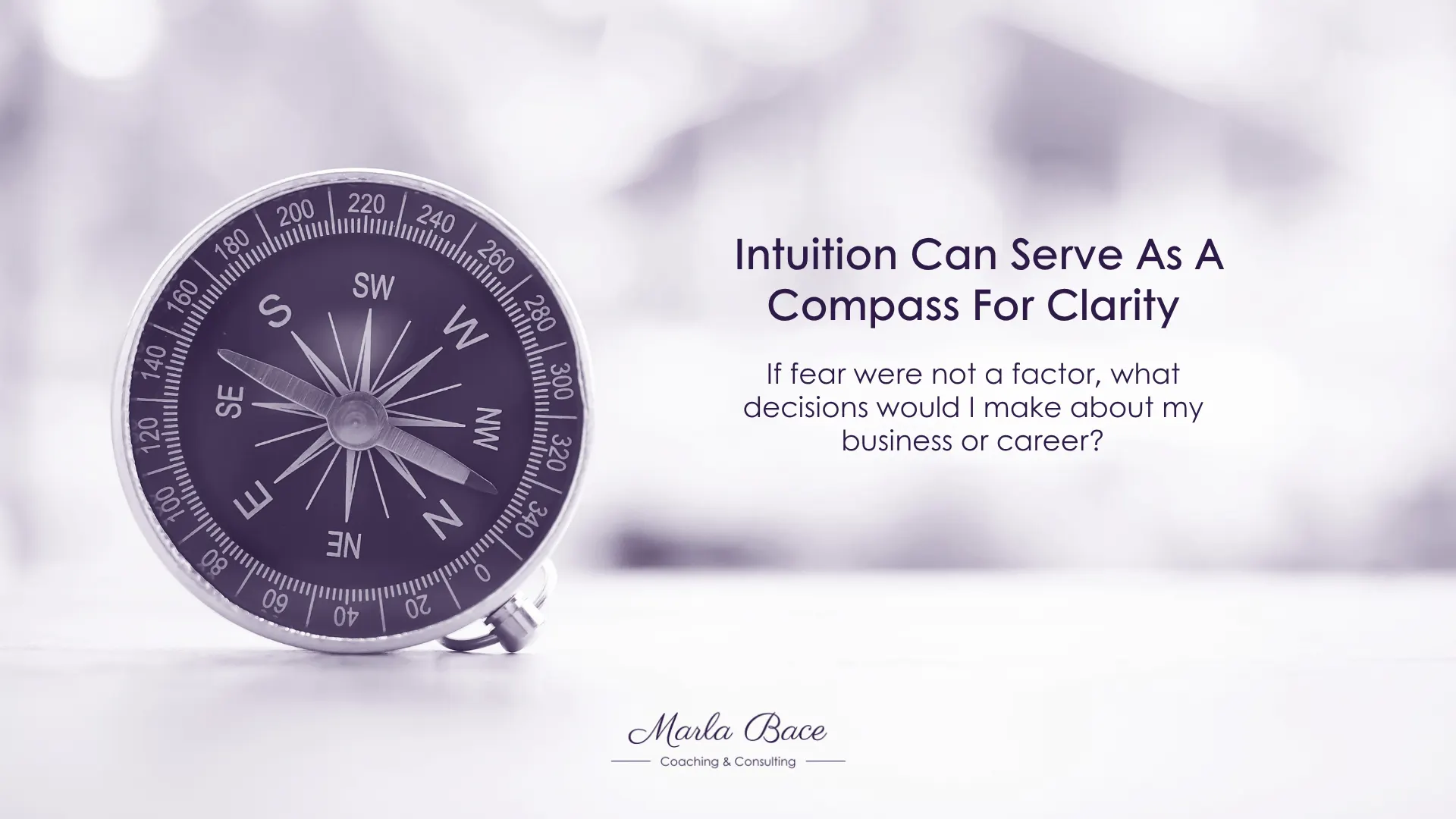
Strategic intuition is the ability to recognize patterns, risks, and opportunities that data alone may not yet reveal. Most senior managers are taught to trust evidence and analysis above all else. What often separates strong strategic leaders is their ability to notice what is missing, what feels misaligned, or what remains unspoken—and then investigate those signals rather than ignore them. Intuition becomes valuable when it works alongside strategy, not in place of it.
What Strategic Intuition Really Is
Recently, I began onboarding a new client—a strong company with equally strong challenges beneath the surface. While interviewing the team, I asked questions designed to go beyond tactics. I paid attention to tone, energy, avoidance, and the pauses between their words.
As they answered, my intuition kept leaning toward something more profound.
Something unspoken.
And I’ve learned to trust that.
So, I wrapped what I was sensing into a larger insight and presented it to the CEO, framing it positively and constructively, without blame or assumption. I shared not just what I heard, but what I felt was behind it, based on decades of pattern recognition, leadership dynamics, and executive experience.
They were stunned—but not defensive.
In fact, they confirmed it.
They said, “Exactly, and here is why….”
That moment reinforced something I’ve seen repeatedly: when you trust your intuitive leadership and know how to translate it into meaningful, actionable insight, you don’t just add value—you elevate the outcome.
Intuition Isn’t Magic. It’s Mastery.
High performers often view intuition as soft, risky, or even dangerous. While not inherently so, overreliance on intuition without a solid foundation of data and logic can lead to misguided decisions.
Intuition is informed of sensitivity resulting from years of experience, emotional attunement, and pattern recognition that runs quietly in the background.
It’s the gut feeling you get before a poor hire.
The tension you sense between two executives that no one is naming.
The pause you feel when a decision looks perfect on paper but feels misaligned.
The unease that creeps in when a project starts drifting—but no one’s called it out yet.
And here’s where emotional intelligence comes in. Intuition is strongest when it’s grounded in self-awareness and self-management, the core competencies of EQ. Self-awareness allows you to recognize the intuitive signal without confusing it with fear, ego, or bias. Self-management helps you respond thoughtfully, rather than react impulsively. When these muscles are well-developed, intuition isn’t reckless — it’s refined.
The strongest leaders aren’t just strategic thinkers. They’re intuitive readers of people, patterns, and timing. And they trust themselves enough to listen.
The Difference Between Strategic Intuition and Instinct
We’ve been taught to default to logic. To justify every decision with facts.
But here’s the problem: the most pivotal leadership moments aren’t always logical. They’re emotional. Human. Complicated.
And that’s where the ego steps in—not as a villain, but as a protector. Its job is to keep you safe, avoid risk, and preserve your sense of control. But in doing so, it often puts you on autopilot—repeating familiar patterns, blocking discomfort, and dismissing internal cues that don’t align with the external narrative.
The ego resists nuance. Intuition requires it.
That’s why overreliance on numbers and action plans—without intuition—often leads to:
- Misdiagnosing problems (treating symptoms instead of root causes)
- Delayed decisions that cost time and trust
- Disconnected communication that misses emotional context
- Hiring based on resume, not resonance
- Failing to recognize when a relationship or initiative is already broken
The discomfort isn’t the issue. The refusal to name it is.
A recent McKinsey study shows that organizations where leaders demonstrate emotional awareness and responsiveness outperform their peers in productivity and retention. This underscores the importance of emotional intelligence in business, inspiring leaders to develop their emotional awareness and use it to their advantage.
How Strategic Intuition Strengthens Leadership Decisions
When intuition is paired with emotional intelligence, it becomes an asset, not a risk. It allows you to:
- Read the energy in a room without words being spoken
- Hear what someone means when they say “I’m fine.”
- Ask the right follow-up question that unlocks a breakthrough
- Course-correct before conflict becomes chaos
And when you can take what you intuitively sense and wrap it in clear, actionable feedback, especially in coaching or leadership conversations, it builds credibility, not confusion.
Why Strategic Intuition Matters in Complex Organizations
This isn’t about throwing out plans or abandoning frameworks. It’s about knowing when something feels off, even when the data looks right, and having the courage to explore that tension. It’s about finding the right balance between trusting your intuition and relying on data-driven strategies.
Most teams don’t fail because of a lack of knowledge.
They stall out because no one’s addressing what’s right below the surface.
Building Strategic Intuition as a Leadership Skill
If intuition isn’t something you’re used to trusting, here are a few places to start:
- Notice your first response. Not the rehearsed one. The felt one.
- Practice pausing. Let the silence stretch. That’s often where the truth shows up.
- Track your accuracy. When you have a gut hit, please write it down. See how often it proves correct. You may be more attuned than you think.
- Pair intuition with inquiry. Ask questions that draw out what’s being protected, not just what’s being said.
Final Thought
The most effective leaders don’t just analyze what’s front of them.
They sense what’s underneath it—and speak to it with clarity and care.
Because when you ignore your intuitive intelligence, you miss opportunities.
But the results are undeniable when you trust it and back it with courage.
What truth are you sensing… but still talking yourself out of?
If you keep sensing that something is happening beneath the surface but struggle to translate that insight into a clear strategic response, a Clarity Review can help.
Together, we explore the patterns, dynamics, and signals that may be influencing your decisions so you can strengthen both your intuition and your strategy.
The Clarity Review was designed for exactly this type of leadership challenge.
A short, focused session to help you see what’s yours to carry—and what isn’t.
Frequently Asked Questions
Strategic intuition is the ability to combine experience, observation, and pattern recognition with analytical thinking. It helps leaders identify risks, opportunities, and emerging issues before they become obvious through traditional data sources.
Yes. Intuition can highlight important signals that deserve further investigation. The most effective leaders use intuition to guide inquiry, then validate insights through evidence, discussion, and analysis.
Trusting intuition begins with understanding where it comes from. If an intuitive signal is based on repeated experience, observed patterns, or contextual awareness, it may be worth exploring rather than dismissing outright.
Instinct is typically an immediate reaction designed for survival or protection. Intuition is often a quieter process of pattern recognition that emerges from accumulated knowledge, experience, and observation.
Many organizations reward measurable evidence and objective reasoning. While these are essential, leaders can become reluctant to acknowledge insights they cannot immediately prove, even when those insights point toward important organizational dynamics.