Career fulfillment often disappears when external success no longer reflects who you are becoming. Many senior managers and directors achieve the milestones they once pursued only to discover that accomplishment and alignment are not the same thing. The problem is rarely a lack of success. More often, it is the growing gap between the role you are performing and the deeper leadership identity trying to emerge.
You’ve built a career most people would envy. You’ve hit the milestones, collected the titles, earned the trust, made the money, and carried the weight. Yet, a question arises: is it success vs fulfillment that truly matters to you? From the outside, you’re a model of achievement — the kind of leader people study, follow, or try to become.
And yet…
There are quiet moments when the question slips in:
“If I’m doing so well, why doesn’t it feel the way it’s supposed to?”
That’s not burnout. That’s not boredom. And it’s not a craving for a vacation, a promotion, or a new challenge.
It’s the early warning sign of misalignment — success built in the wrong direction.
Why Career Fulfillment Matters More Than Success
High performers are masters at delivering results. You were trained to run fast, fix problems, lead people, and execute at a high level — with or without clarity. And for a long time, that worked.
But here’s the truth: most leaders don’t say out loud:
You can be excellent at what you do and still be wildly disconnected from who you are.
That disconnect shows up quietly at first:
- The work still looks impressive, but it no longer feels meaningful
- You hit targets, but the satisfaction fades fast
- You’re “on” in every room, but not fully present in your own life
- You can’t point to what’s wrong — only that something is missing
That “something” isn’t motivation or discipline or gratitude.
It’s soul purpose — the part of you that executive coaching alone can’t access if you’re only focused on performance.
Success Isn’t the Problem — Misalignment Is
Your success wasn’t random. It’s a result of relentless work, refining your leadership presence. You learned to perform under pressure, read the room, and make decisions with incomplete knowledge. The credibility you have now? You earned it, the hard way.
But somewhere along the way, EQ got reduced to a skillset instead of a signal.
Your intuition got benched in favor of logic.
The signs and synchronicities that tried to redirect you? You outworked them.
You’ve mastered achievement. Fulfillment requires something different — not softer, not easier, but more honest.
Are You Building What You Want — or What You Learned to Want?
Ask most successful people how they got where they are, and they’ll trace their path through opportunity, timing, talent, or circumstance. Rarely purpose. Rarely choice.
And it’s not because they don’t care — it’s because they never stopped long enough to question the momentum.
Let’s be blunt:
A life can look right on paper and still feel off in practice.
You’ve been rewarded for your capability — not necessarily your calling. And capabilities can take you far… but they can also trap you.
Finding Career Fulfillment at the Next Level of Leadership
If you’ve built something impressive but feel the undertow of restlessness, start here:
1. Have I been chasing success I was taught to want, or the kind I’m actually meant for?
2. Do my accomplishments reflect my calling, or just my capability?
3. Have I built a life that looks right on paper but feels off in practice?
4. Is my growth aligned with who I’m becoming — or who I used to be?
5. If I keep succeeding on this path, will it lead to fulfillment — or further from it?
If your body reacts before your brain answers, pay attention.
That’s clarity trying to break through.
When EQ Meets Soul Purpose
Leadership presence without alignment is merely performance. It’s when your actions and intentions are not in sync. But leadership presence with alignment becomes power. It’s when you are not just performing, but truly influencing and making a difference.
Leadership presence with alignment becomes power.
This is where executive coaching evolves — not into something softer, but into something truer. EQ stops being about managing emotions and starts being about listening to them.
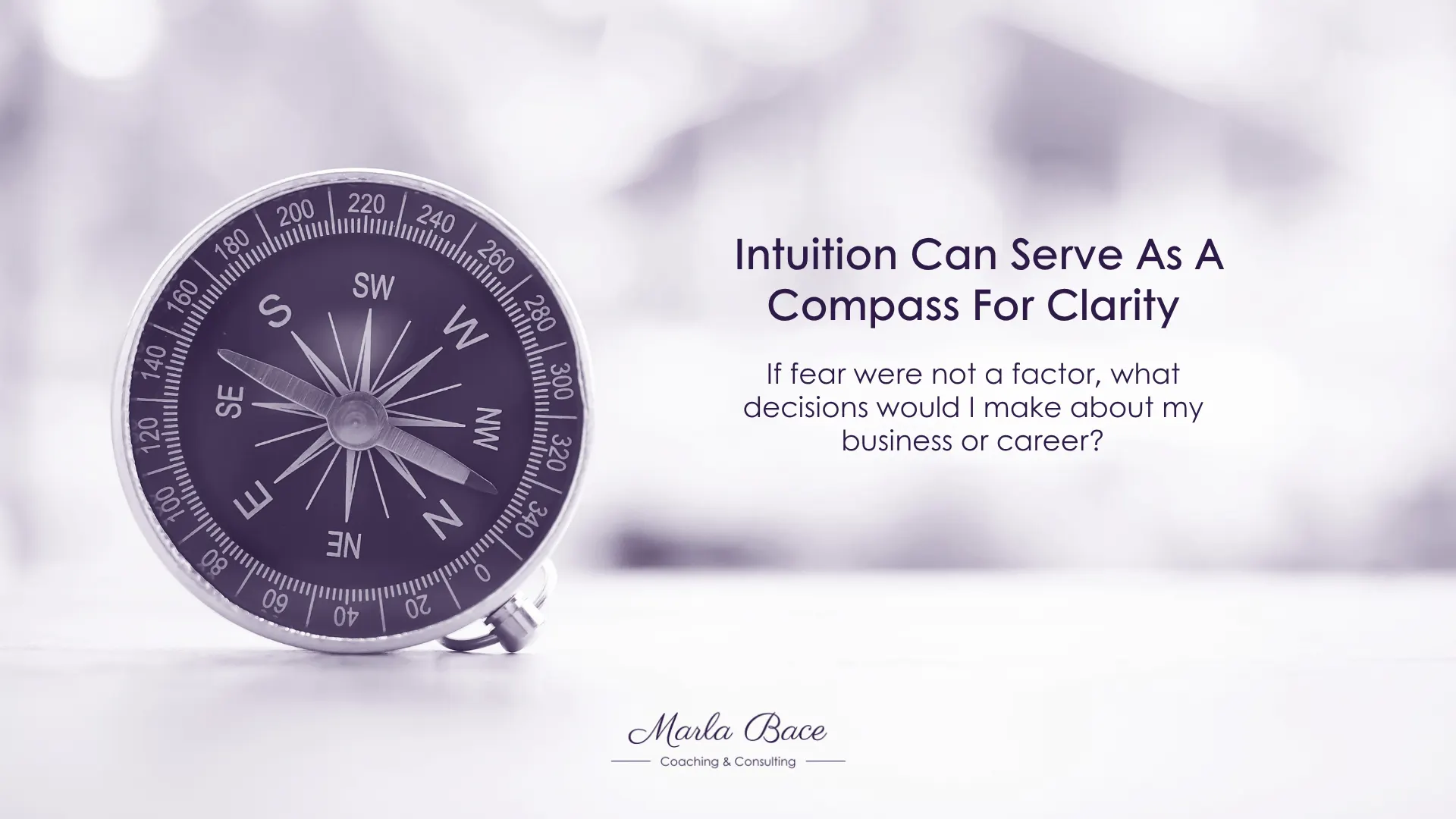
Your intuition isn’t mystical. It’s satellite data that most high achievers refuse to download because it doesn’t come with a spreadsheet.
Start noticing:
- What drains you even when you’re good at it
- What pulls at you even when it doesn’t fit the plan
- What keeps resurfacing no matter how you rationalize it away
- What signs keep repeating — and why you keep ignoring them
Here’s a link that backs up what many leaders eventually admit:
Harvard Business Review: Why Leaders Lose Meaning in Success
Purpose isn’t a luxury. It’s a performance enhancer — the one most people skip until their achievements stop working as anesthesia.
Why Successful Leaders Lose Career Fulfillment
Let’s be clear: I’m not here to convince you to burn your life down. I’m here to remind you that fulfillment doesn’t show up when you’ve earned it. It shows up when you start building for it.
You can keep collecting wins and raising stakes in a life that doesn’t feel like yours — and no one will call you out. In fact, they’ll applaud you for it.
But you’ll know.
And eventually, the dissonance between your external success and internal truth becomes too pronounced to ignore — and too costly to rectify later.
Rebuilding Career Fulfillment Through Self-Awareness
Fulfilled leaders aren’t lucky — they’re honest. They don’t let go of their ambition, they just shift its focus. Success doesn’t get rejected, it gets realigned.
That’s what soul purpose looks like in the real world — not crystals and journaling under the moon (unless you want that), but a recalibration of direction, desire, and identity.
Leadership presence without alignment is noise.
With alignment, it becomes not just influence. But a powerful force that can shape the future.
Are you ready to ask yourself the hard question?
Be straight with yourself:
Are you actually fulfilled — or just functional?
Because if your life keeps looking better than it feels, you don’t need to work harder.
You need to work truer.
And that’s where I come in…
🔥
If success has stopped feeling like a win — but you’re not about to coast, quit, or settle — it’s time for a real conversation.
This isn’t therapy. It’s not a motivational seminar. No need for a life overhaul. It’s simply a thoughtful, strategic recalibration.
A strategic, soul-aligned recalibration isn’t about dismantling what you’ve built; it is designed for those who have too much at stake to demolish everything and possess too much self-awareness to continue pretending.
If you’re done performing alignment and ready to experience it, reach out.
Your next level isn’t waiting. It’s requesting your participation.
If you have achieved the goals you once believed would bring satisfaction but still feel that something is missing, it may be time to explore what that feeling is trying to tell you.
A Clarity Review provides the space to examine where success and fulfillment have diverged, what is changing beneath the surface, and what your next chapter of leadership may require.
The Clarity Review was designed for exactly this moment.
A short, focused session to help you see what’s yours to carry—and what isn’t.
Frequently Asked Questions
Success is often measured by external markers such as promotions, titles, income, and recognition. Fulfillment comes from alignment between your work, values, strengths, and sense of purpose. When those diverge, success can begin to feel hollow.
Yes. Many senior professionals reach a point where the goals that once motivated them no longer provide the same sense of meaning. This often signals growth and the need to re-evaluate what success means at the next stage of leadership.
Success is typically measured by external outcomes. Fulfillment is an internal experience of meaning, alignment, contribution, and authenticity. A person can have one without necessarily having the other.
Common signs include persistent dissatisfaction despite strong performance, a sense of misalignment, reduced motivation, or a growing awareness that your strengths are no longer being fully utilized. These signals often point to a need for reflection rather than immediate action.
Yes. Coaching can help leaders clarify what is creating the disconnect, identify emerging priorities, and make decisions that align more closely with who they are becoming as leaders and individuals.