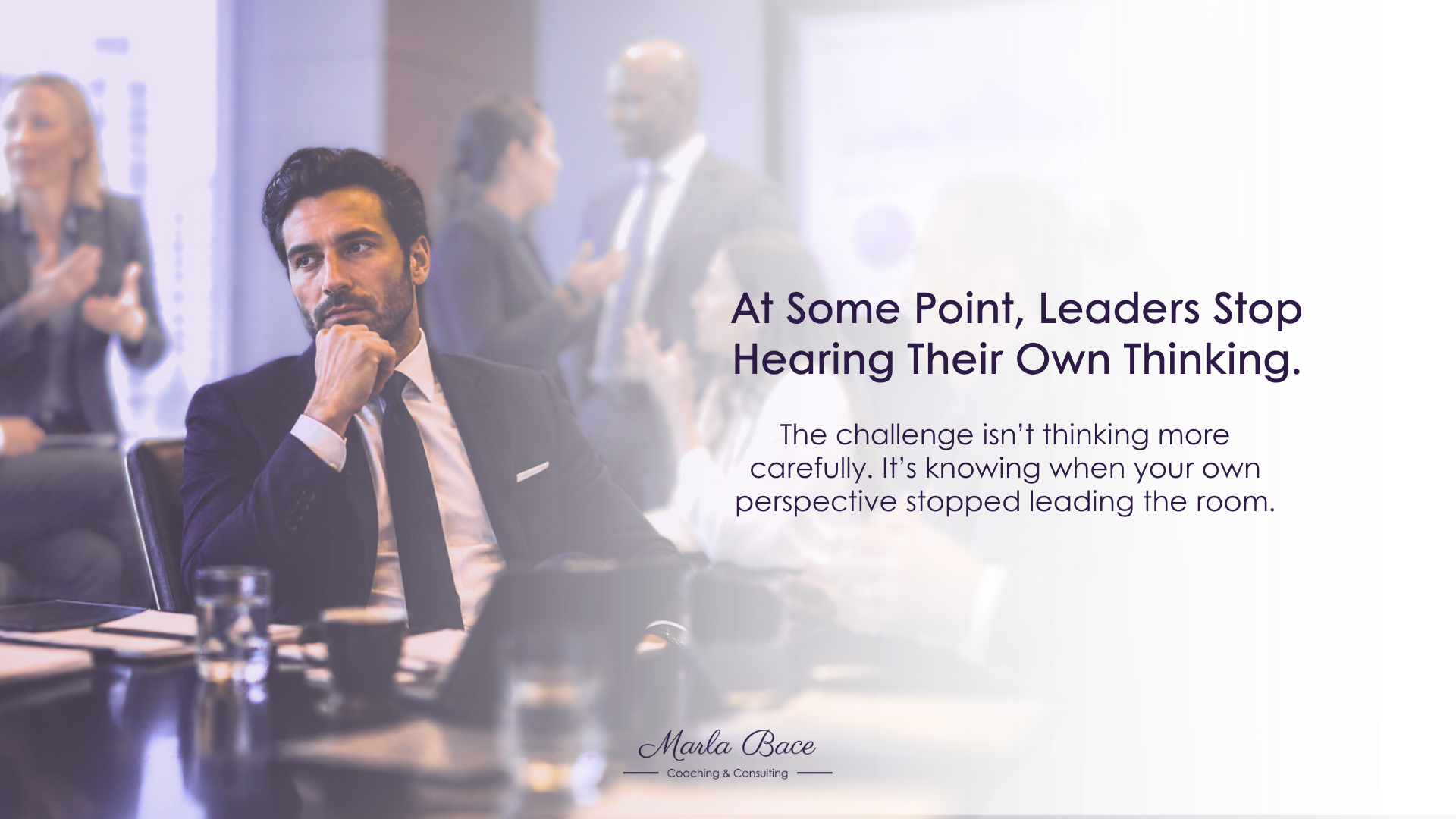
There’s a moment many leaders don’t talk about.
Not publicly. Not in meetings. And often, not even with people they trust.
It doesn’t happen when things fall apart—
It happens when everything seems to be working.
The role has expanded.
The visibility is there.
Decisions carry weight.
Others defer more quickly.
From the outside, it looks like authority.
From the inside, something else begins to surface.
A pause before responding.
A second-guessing after the decision is made.
A quiet question that doesn’t fully resolve:
Am I seeing this clearly?
This is the paradox most high-performing leaders encounter.
The more others trust them—
The more self-trust in leadership can quietly begin to erode.
When External Trust Outpaces Self-Trust in Leadership
When feedback becomes indirect, leaders start questioning their interpretation—not their capability.
Early in a career, feedback is direct.
A decision works, or it doesn’t.
Results show up quickly.
Someone senior validates or redirects.
The signal is clean.
As responsibility increases, that clarity disappears.
Feedback becomes layered.
Silence replaces direct disagreement.
Alignment becomes harder to interpret.
Leaders stop questioning their capability.
They start questioning their interpretation.
Not:
Can I do this?
But:
Am I reading this correctly?
The Cognitive Cost of Being the Person Everyone Trusts
The more people rely on you, the more context you carry.
At senior levels, trust takes on a different shape.
People bring incomplete information.
They expect direction in ambiguity.
They rely on you to stabilize uncertainty.
Over time, you become:
- the point of escalation
- the translator between perspectives
- the place where ambiguity gets processed
You are no longer just making decisions.
You are absorbing the conditions around them.
That’s where self-trust begins to erode.
Not because you’re less capable.
Because you’re holding more than anyone else in the room—and self-trust becomes harder to access under that weight.
Research in decision-making, including the work of Daniel Kahneman, has shown that as cognitive load increases, judgment doesn’t disappear — it becomes harder to trust.
How Doubt Changes Decision-Making at the Top
Doubt at senior levels isn’t hesitation—it’s awareness that can inspire confidence when managed well.
From the outside, hesitation looks like weakness.
From the inside, it’s often the opposite.
It’s awareness of:
- downstream impact
- incomplete information
- competing priorities
- unspoken dynamics
So leaders compensate.
They:
- analyze longer
- seek more input
- replay decisions after they’re made
Not because they don’t trust themselves.
Because they understand the cost of getting it wrong.
How High-Functioning Leaders Rebuild Self-Trust
Self-trust doesn’t return through more information. It returns through sharper discernment.
Most leaders try to fix this by:
- gathering more data
- refining frameworks
- improving their thinking
But the issue isn’t information.
It’s ownership of judgment.
Somewhere along the way, internal certainty becomes tied to:
- how others respond
- whether alignment holds
- how quickly outcomes validate
And when those signals fluctuate, so does trust.
The shift back isn’t about certainty.
It’s about recognizing:
Not every signal deserves your interpretation.
Some variables don’t need to be held.
And not every outcome determines whether your judgment was sound.
Why Even Experienced Leaders Lose Self-Trust
Confidence doesn’t remove doubt—it changes your relationship to it.
Internal trust does not mean:
- feeling confident all the time
- eliminating ambiguity
- removing second-guessing
It means:
moving forward even when those things are present
Because you are no longer relying on the environment to confirm your thinking.
The Question That Rebuilds Self-Trust
Most leaders ask:
What am I missing?
A more useful question is:
What am I holding that isn’t mine to resolve?
That question immediately:
- reduces cognitive load
- clarifies where your judgment belongs
And that’s where self-trust begins to rebuild.
Why This Matters Now
External signals are getting noisier, not clearer.
The environment most leaders are operating in is becoming:
- faster
- more ambiguous
- more interdependent
Which means:
If self-trust is tied to external signals, it will continue to fluctuate.
Where This Leaves You
If you’ve noticed:
- more second-guessing than usual
- decisions lingering longer than they used to
- a sense that you’re carrying more than the role requires
You’re not off track.
You’re at a transition point.
The shift is not becoming more confident.
It is becoming more selective about what you hold, interpret, and act on.
A Final Reflection
The leaders who sustain themselves at higher levels are not the ones who eliminate doubt.
They are the ones who:
- recognize it earlier
- contextualize it faster
- and move without needing it to disappear
Because they understand something most people don’t articulate:
Trust is not built by removing uncertainty.
It’s built by deciding within it.
If This Is Something You’re Navigating
This is where most leaders don’t need more feedback—they need space to think clearly again.
Request a Clarity Review
Frequently Asked Questions About Self-Trust In Leadership
Leaders often lose self-trust as responsibility increases and feedback becomes less direct. As a result, they begin questioning their interpretation rather than their capability.
Second-guessing in leadership is usually driven by increased cognitive load, ambiguity, and the weight of downstream impact—not a lack of competence.
Leaders rebuild self-trust by reducing unnecessary cognitive load, clarifying what is theirs to decide, and relying less on external validation signals.
No. Experience changes the relationship to doubt. High-performing leaders still experience uncertainty but move forward without needing it to disappear.
As responsibility increases, leaders carry more variables and ambiguity, which can weaken perceived confidence even as their capability grows.