Leadership confidence often declines when success no longer provides clear answers about what comes next. Most senior managers assume a loss of confidence means something is wrong with them. In reality, hesitation frequently appears when leaders are navigating unfamiliar expectations, shifting organizational dynamics, or a role that demands a different version of leadership. The issue is often not confidence itself—it is uncertainty about how to interpret the environment and what the next level requires.
What Causes Leadership Confidence to Decline?
Confidence doesn’t vanish in a single moment. It fades gradually, almost imperceptibly. One day, you wake up and realize a hint of hesitation has replaced the energy that used to propel you. You start questioning your instincts, holding back in meetings, and pondering why tasks that once felt effortless now seem to require more effort.
That’s how apathy/defeatism begins — not as a lack of ambition, but as a slow erosion of self-trust.
I’ve worked with clients who come to me knowing they’re not showing up as the best version of themselves. Some can name why: a toxic environment, a draining leader, a personal setback. Others can’t. They know something has shifted, and they can’t seem to get back to their center.
Confidence, or the lack of it, sits at the core of that experience. It’s not just a feeling; it is more, it is your internal compass. And when you lose your footing, everything else loses rhythm too.
Leadership confidence often changes when leaders enter unfamiliar environments with different expectations and demands.
Leadership Confidence and the Transition to Higher Levels
Many high achievers confuse presence with performance. They think leadership presence is about how they show up to others — the tone, the posture, the command in a room. But real presence starts long before anyone else sees it.
It begins with inner stability, your knowing who you are, what you stand for, and how you want to move through the world. Without that baseline, confidence becomes conditional. You start performing your role instead of embodying it.
One client described it perfectly:
“I was doing everything right, but I felt like I was watching myself do it and not actually living it.”
When we began working together, their voices were calm but flat, their words measured but heavy. They’d been through multiple leadership transitions, each one slowly chipping away at their confidence. Once they had a safe space to unpack it, one without judgment or expectation, they saw how they were showing up differently, how others were noticing.
We didn’t start by rewriting their career plan. We began by reestablishing their baseline.
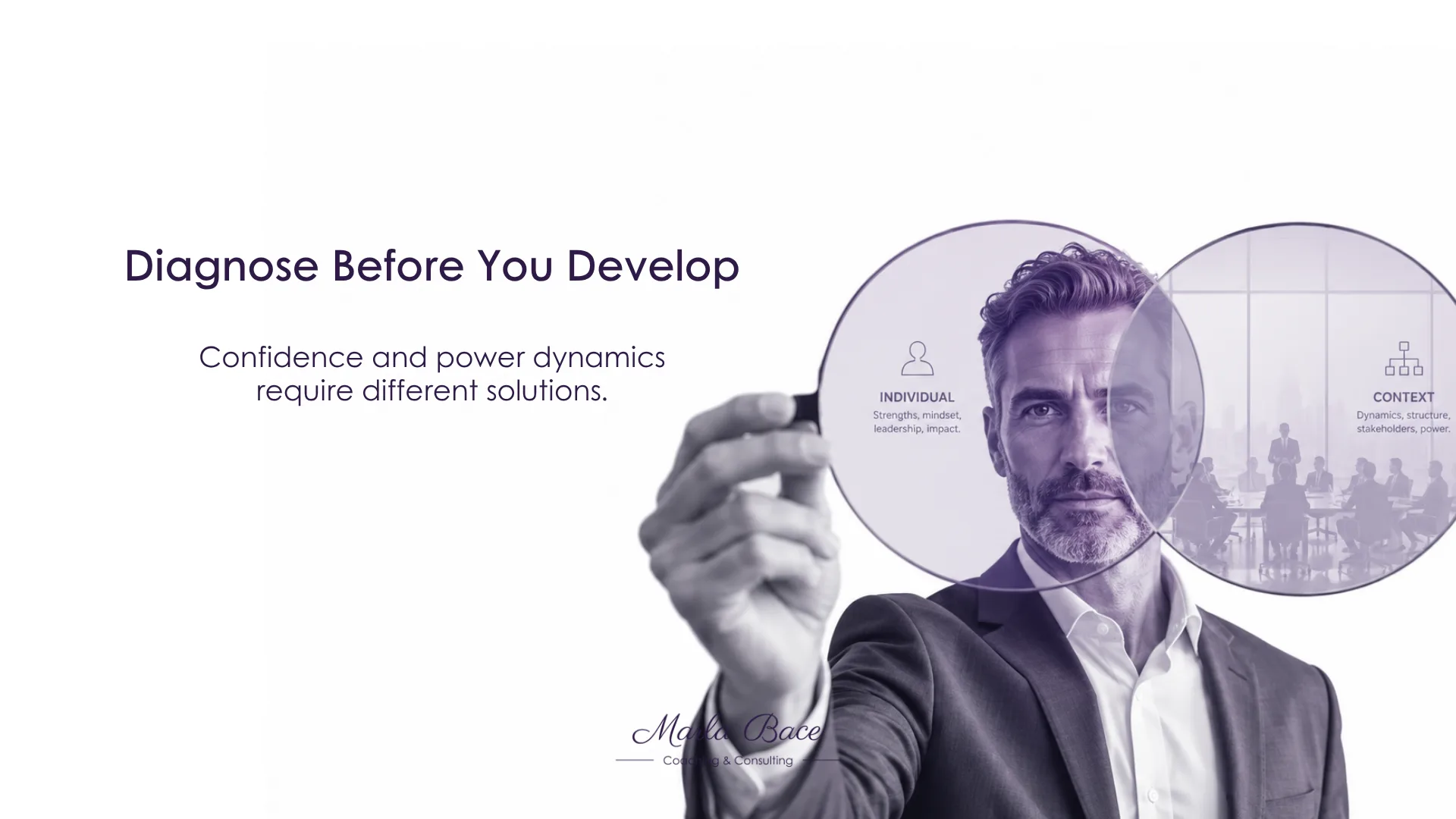
Why Leadership Confidence Is Often a Context Problem
Before you can rebuild confidence, you have to remember what solid ground feels like. For many professionals, that ground has been buried under years of pressure, politics, and performance metrics. Or quickly eroded by a merger/acquisition.
To reestablish your baseline:
- Reconnect to what you know is true. Not what others validate, but what you feel in your core.
- Name what’s in your way. Avoiding it keeps it alive. Acknowledging it gives it shape — and power to change.
- Observe your energy. Confidence expands where energy flows freely; it contracts where you’re forcing outcomes.
As we peeled back layers, my client began to speak differently. Their language shifted from “I am not sure, or they will not” to “I know I can XYZ.” Within months, they repositioned themselves as a force within their company, and — most importantly — rediscovered their own voice.
The transformation wasn’t about tactics or networking scripts. It was about reconnection.
Strong leadership confidence is built on understanding context rather than having all the answers.
Rebuilding Leadership Confidence Through Self-Trust
Another client came to me after months of stagnation. Their performance was unchanged on paper, but their enthusiasm had flatlined. They didn’t recognize it as burnout; they called it “just getting through the week.”
Once we slowed things down, they realized how much energy they had spent keeping up appearances and trying to look motivated instead of cultivating it. They had lost sight of the “why” that once drove them.
Confidence, at its root, is not about bravado or false certainty. It’s about belief — in your value, in your direction, in your capacity to navigate what’s next. When that belief fractures, drive naturally follows. Bravado, on the other hand, is a superficial display of confidence that often masks insecurity. It’s essential to strive for authentic confidence, rooted in self-awareness and self-trust, rather than falling into the trap of bravado.
To move from apathy to drive:
- Revisit your wins. Not for ego, but for evidence. You’ve done hard things before. A small note: I do this at the start of all of my sessions. I have clients take it back to their teams, and notice this simple exercise made a huge impact.
- Rebuild trust in yourself. Confidence grows in small, consistent choices that align with your truth.
- Refuse to outsource validation. External recognition feels good, but it’s never a sustainable source of fuel.
As this client began aligning their actions with their values, their energy returned. In one case, their environment changed; in others, it did not. What changed was their level of engagement.
Leadership confidence tends to return when leaders regain trust in their judgment and ability to interpret complex situations.
Strengthening Leadership Confidence Without External Validation
Confidence and self-awareness are not just intertwined; they are inseparable. One reveals the truth; the other empowers you to act on it. Together, they create a powerful leadership presence that is not just about how you show up, but about the impact you make.
When you know who you are and can see yourself clearly, your decisions carry conviction. You stop reacting to others’ expectations and start responding from alignment. That’s the shift from anxious control to quiet authority — the kind that doesn’t need to prove itself.
For many of my clients, this process ripples far beyond work. Once they reconnect with their inner footing, their relationships shift — with peers, bosses, even spouses. Conversations become less defensive and more collaborative. Boundaries become clearer. Choices feel intentional, not obligatory.
Confidence is contagious — not because it’s loud, but because it’s grounded.
The Energy of Fulfillment
Fulfillment isn’t just happiness or success; it’s coherence. It’s when your thoughts, emotions, and actions are finally moving in the same direction.
Confidence is what makes that coherence possible. It bridges the space between intention and impact. Without it, fulfillment becomes fleeting — a feeling you chase but can’t sustain.
The truth is, fulfillment requires movement. And movement requires trust — not just in outcomes, but in yourself.
So, if you’ve felt off-balance lately, ask yourself:
- Have I been waiting for confidence to return before I act?
- Or is my confidence waiting for me to take the first step?
You don’t need to have everything figured out to move forward. What you need is enough self-trust to take the first step. Remember, your confidence is not waiting for the perfect moment to return. It’s waiting for you to take the first step towards it.
From Confidence to Presence
As confidence returns, presence strengthens. You stand taller, speak clearly, and stop seeking approval to exist as you are. That’s when fulfillment follows — not as a reward, but as a reflection.
Because when you stand in your truth, the world adjusts around you.
And that’s the moment you stop chasing leadership presence — you become it.
Final Thought:
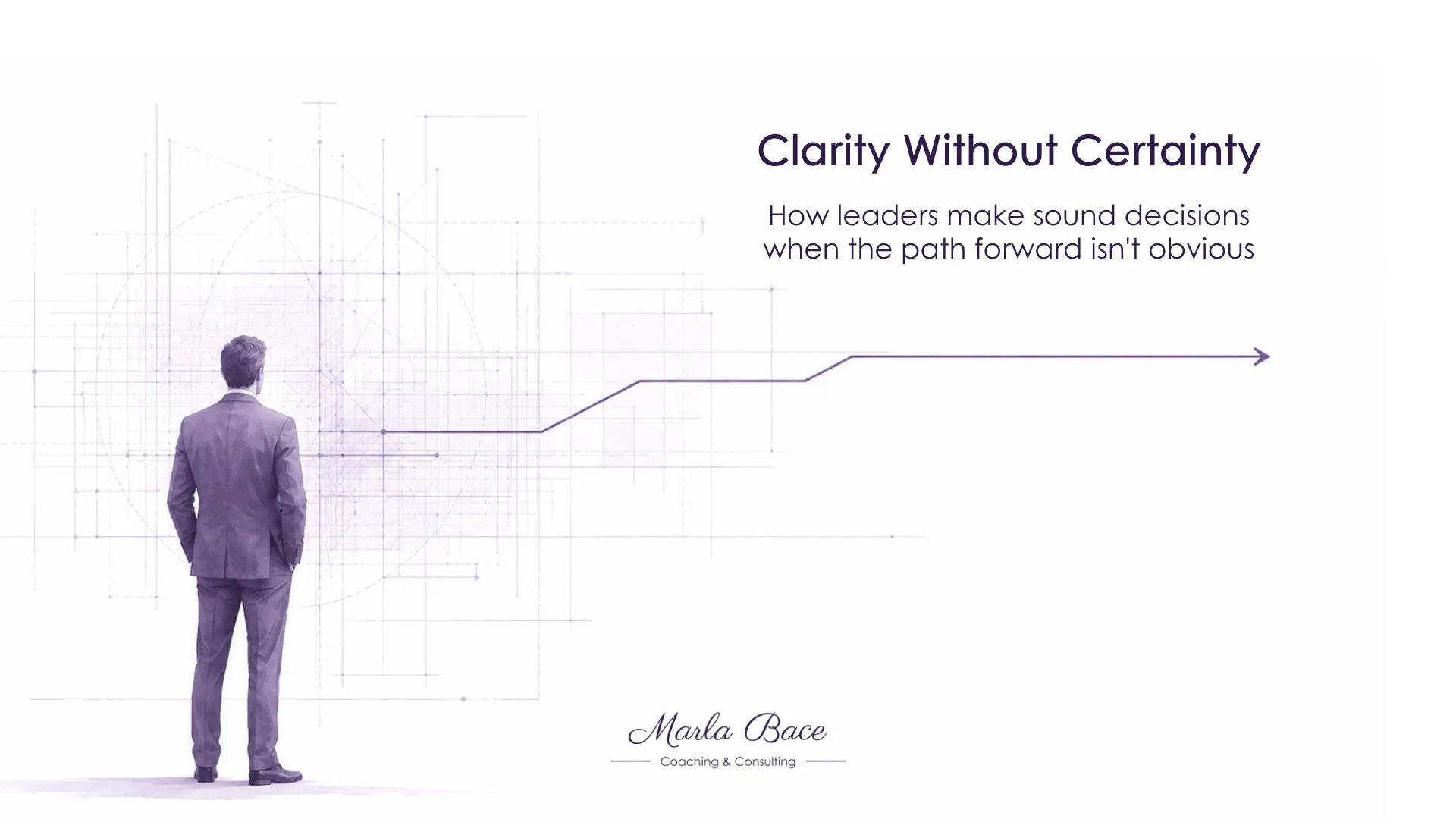
Sustainable leadership confidence comes from clarity, not certainty.
The path from apathy to fulfillment isn’t paved with hustle. It’s grounded in confidence — in owning who you are, where you are, and what you’re becoming. Confidence gives you back your footing so you can move with clarity and courage, one aligned step at a time. Now, it’s your turn to take that first step. Reflect on your confidence, understand its importance, and start taking actionable steps to enhance it. The journey to authentic leadership presence begins with a single step.
Because drive isn’t something you find, it’s something you reclaim.
For further reading on confidence and authenticity in leadership, see this article from Harvard Business Review on How Confidence Makes You a Better Leader.
If your confidence feels different than it once did, the answer may not be to push harder or become more resilient.
A Clarity Review helps uncover the contextual factors, hidden dynamics, and leadership transitions that may be affecting how you see yourself and your future.
The Clarity Review was designed for leaders navigating exactly this kind of turning point.
A short, focused session to help you see what’s yours to carry—and what isn’t.
Frequently Asked Questions
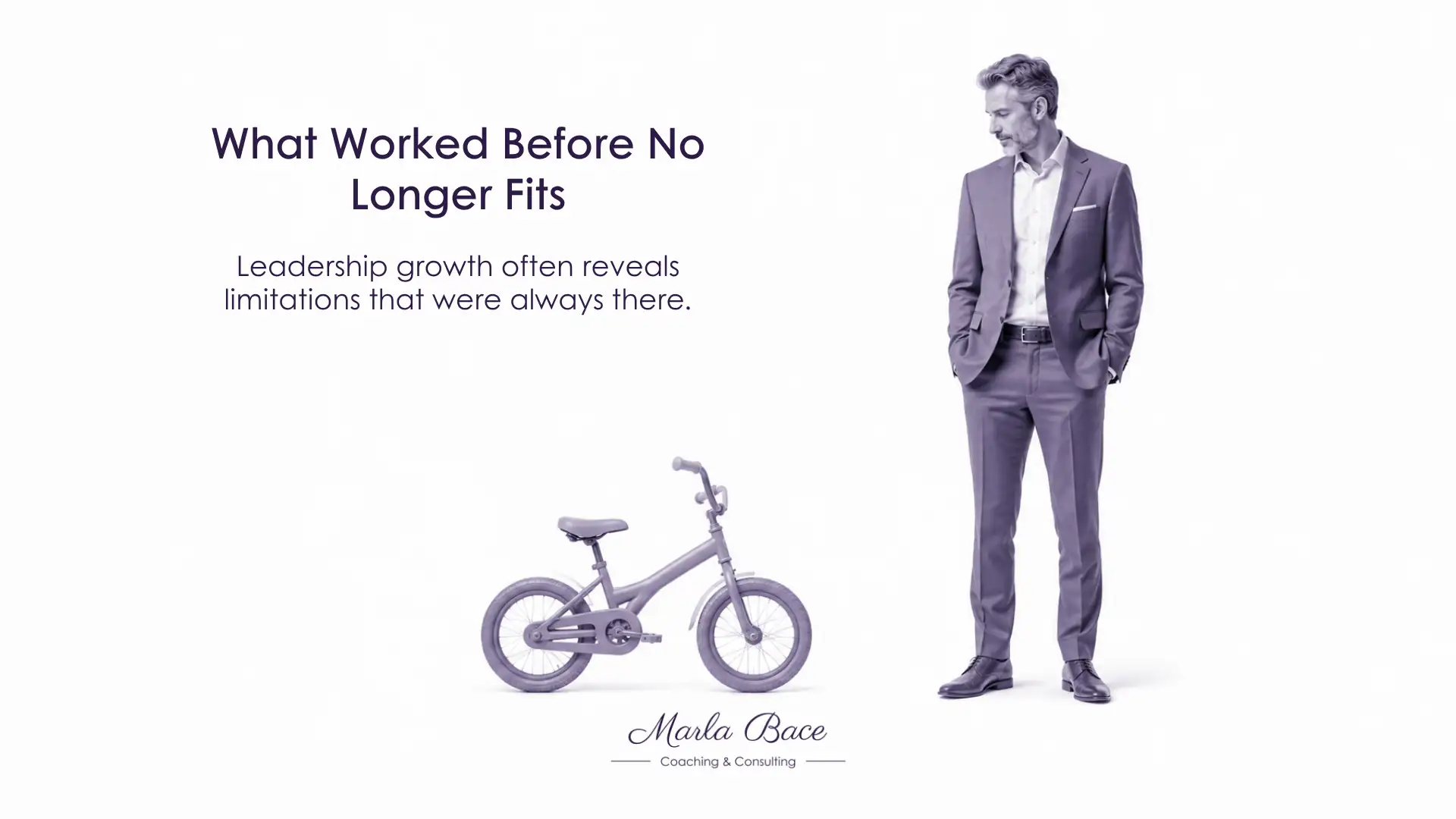
Confidence often decreases when leaders encounter new levels of complexity, responsibility, or uncertainty. What worked in previous roles may no longer be sufficient, creating doubt even when capability remains strong.
No. Confidence challenges are often influenced by context, changing expectations, organizational dynamics, and unclear feedback. Sometimes the problem is not self-belief but difficulty understanding what the environment is asking of you.
Confidence influences how leaders communicate, make decisions, and respond under pressure. When confidence is grounded in self-awareness and sound judgment, it strengthens credibility and executive presence.
Confidence is often linked to experience and competence in specific situations. Self-trust is the deeper ability to rely on your judgment, even when outcomes are uncertain or external validation is unavailable.
Rebuilding confidence starts with understanding what has changed. By identifying new expectations, uncovering blind spots, and developing greater clarity about their role and environment, leaders can regain trust in themselves and their decisions.