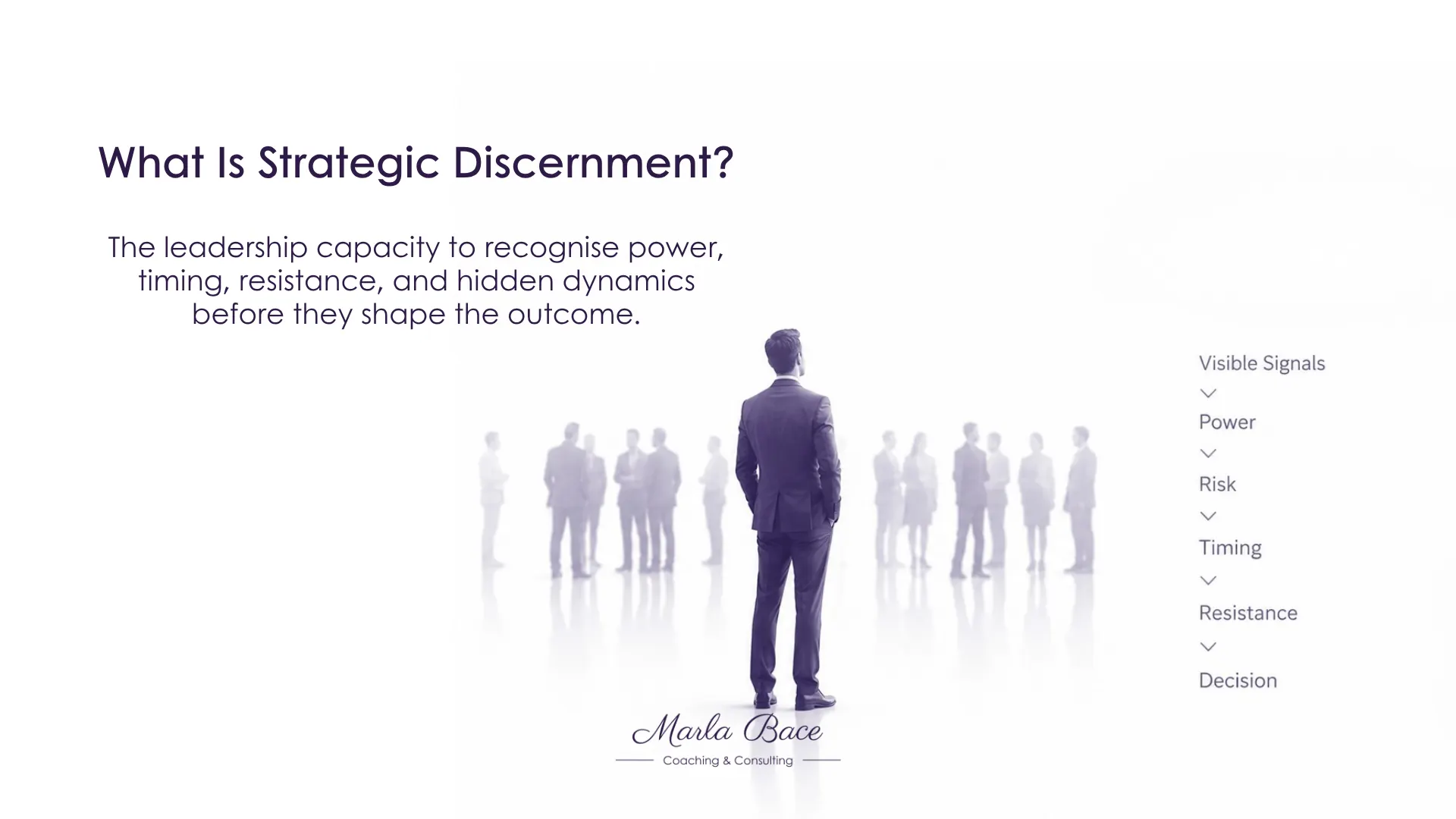
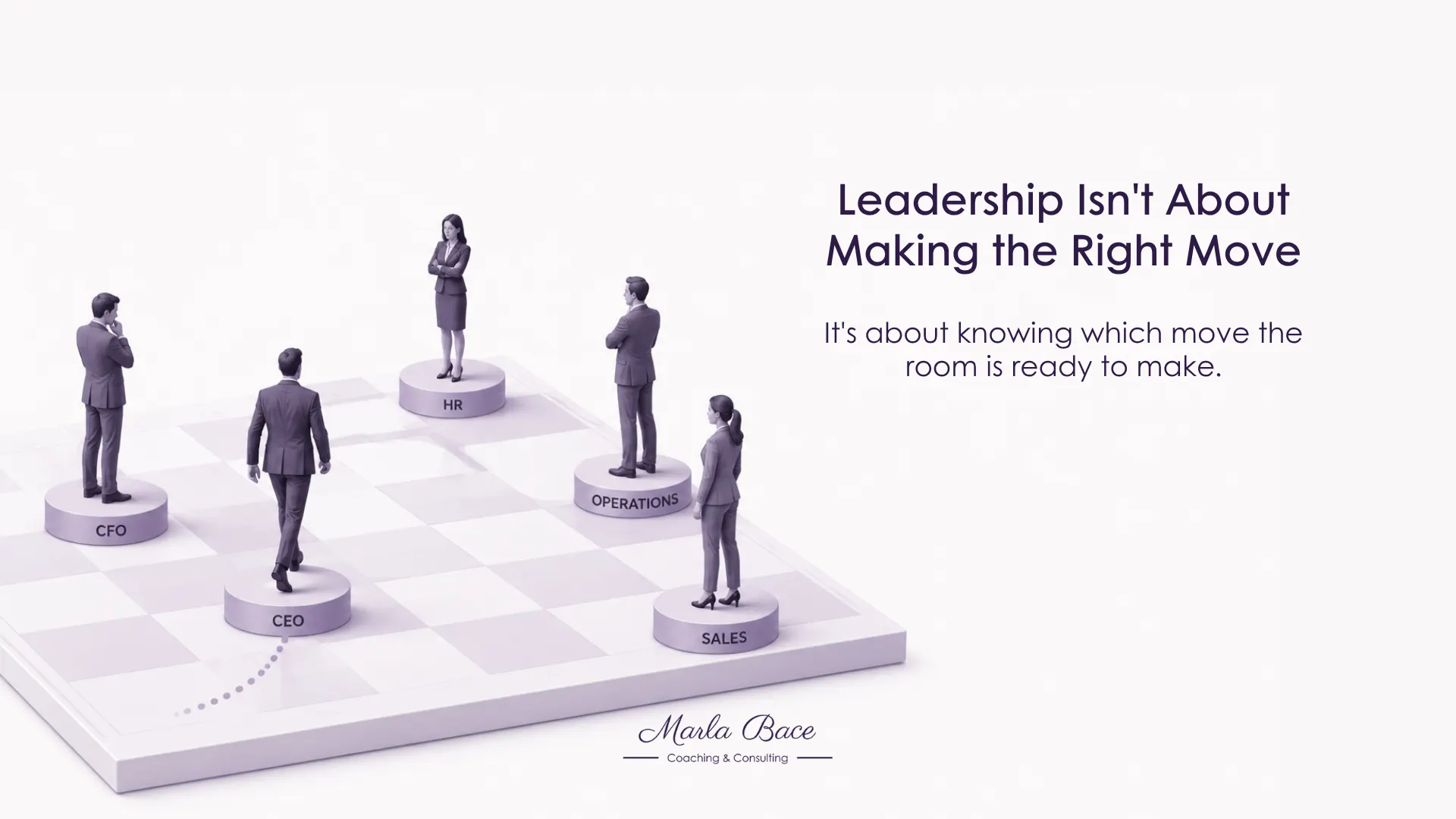
Leadership presence is the ability to understand what is happening in a room and respond in a way that creates trust, confidence, and influence. Most senior managers focus on confidence, communication style, or executive presence techniques. What often matters more is social awareness—the ability to accurately read people, dynamics, motivations, and unspoken signals. Leaders who consistently influence outcomes are rarely the loudest voices in the room; they are often the ones who understand the room best.
Why Social Awareness Is the Emotional Intelligence and Leadership Presence Edge
In emotionally intelligent leadership, social awareness refers to the ability to accurately perceive what others are feeling, both as individuals and as a collective. That includes:
- Recognizing subtle nonverbal cues
- Understanding what’s being said—and what’s being avoided
- Being aware of power dynamics and emotional undercurrents
- Navigating conflict, tension, or disengagement with empathy and precision
According to Daniel Goleman’s Emotional Intelligence Framework, social awareness is one of the four essential domains that define great leaders. It’s especially vital in environments where change, stress, or performance demands are high, because in those moments, people stop listening to your words and start watching your energy.
A recent study published in the Journal of Applied Psychology found that leaders who demonstrated strong emotional congruence—meaning their body language, tone, and words were in alignment—were perceived as more trustworthy, even when delivering negative news.
That’s not just a soft skill. That’s leadership presence in motion.
You Can’t Have Presence Without Perception
Imagine a leader who strides into a meeting, confident and prepared. But within five minutes, they’ve misread the tension in the room, talked over a key contributor, and completely missed a silent disagreement brewing at the other end of the table.
They look the part. They sound the part.
But they’ve lost the room.
Why? Because leadership presence isn’t about commanding attention—it’s about creating connection.
Without social awareness, even the most articulate leaders fall flat. Because presence isn’t just how you show up, it’s how people experience you.
And people don’t trust leaders who seem disconnected from reality—even if they’re competent.
Many high performers struggle with this. They’ve spent years sharpening communication skills, refining executive presence, and crafting personal brands. But they’re operating from the neck up. They’ve mastered delivery, not depth.
Social awareness brings you back to the human level, where trust is built and influence is earned.
Empathy Isn’t Weak—It’s a Strategic Superpower
Let’s talk about empathy, the centerpiece of social awareness and often the most misunderstood.
Empathy is one of the most actionable expressions of emotional intelligence and one of the most misunderstood.
Empathy isn’t about absorbing everyone else’s emotions or being agreeable all the time. It’s about seeing people clearly. It’s about noticing when someone’s disengaged, asking the tricky question when no one else will, and acknowledging unspoken emotions in the room with clarity, not fear.
In leadership, empathy allows you to:
- Anticipate resistance before it escalates
- Communicate hard decisions with respect
- Earn loyalty by honoring others’ experiences
- Create psychological safety without compromising performance
When integrated with presence, empathy gives your leadership a gravitational pull. People don’t just follow you—they trust you. And in today’s workplace, trust is the currency that buys engagement, innovation, and retention.
How Social Awareness Elevates Leadership Presence
Here’s the truth: the most magnetic leaders aren’t the ones with the most prominent voices. They’re the ones who can:
- Read a room mid-conflict and de-escalate with a single sentence
- Sense when someone needs acknowledgment, not instruction
- Navigate complexity with calm, because they’re attuned to more than just outcomes
This isn’t magic. It’s trained perception. And it’s what makes leadership presence more than posture or poise—it makes it real. It is emotional intelligence at its most operational: presence, perception, and courage in action.
Let’s break this down into what social awareness looks like in practice:
Four Ways to Cultivate Social Awareness and Strengthen Leadership Presence
- Be the Last to Speak in the Room
- Leaders often feel pressure to have the answer. But sometimes, the most powerful move is to listen longer. Socially aware leaders wait, observe, and ask before they assert. This gives them an edge and gives others space to reveal the truth.
- Look for What’s Not Being Said
- When a team agrees too quickly or when someone’s silence stretches too long, socially aware leaders notice. They make it safe to speak. They surface the unsaid.
- Mirror Without Mimicking
- Matching someone’s tone or pace without losing authenticity builds unconscious rapport. This is emotional intelligence applied to real-time influence.
- Ask “What’s shifted in this dynamic?”
- If a meeting suddenly stalls or a team member pulls back, ask yourself what changed. Social awareness includes awareness of timing, emotion, environment, and the courage to respond to it.
Leadership Presence Isn’t a Performance. It’s a Relationship.
Let’s end here: presence is not a stage act. And it’s not something you turn on when you walk into the boardroom.
Your leadership presence is felt in the hallway before the meeting, in the pause after a problematic comment, in the eye contact you hold—or avoid—when stakes are high.
And it’s your social awareness that ensures it’s felt as authentic, grounded, and real.
In this era of AI, rapid communication, and hybrid teams, people crave what’s human. They want leaders who don’t just “manage results” but see people. And to be that kind of leader, you must become fluent in the emotional and social landscapes around you. This has numerous benefits, from improved team dynamics to increased trust and loyalty.
Presence without perception is performance.
Presence with perception is not just power- it’s the essence of effective leadership.
And to be that kind of leader, you must become fluent in the emotional and social landscapes around you. That’s real emotional intelligence.
If you feel like you’re contributing valuable insights but your influence is not matching your capability, the issue may not be confidence.
A Clarity Review helps you understand the dynamics shaping how others experience your leadership, identify what you’re missing in the room, and strengthen your ability to influence without relying on authority alone.
The Clarity Review was designed for exactly this kind of leadership challenge.
A short, focused session to help you see what’s yours to carry—and what isn’t.
Frequently Asked Questions
Leadership presence is the ability to create confidence and credibility through how you communicate, make decisions, and respond to situations. It shapes how others perceive your leadership effectiveness and readiness for greater responsibility.
Social awareness helps leaders understand what people are thinking, feeling, and responding to, even when it is not explicitly stated. This allows them to communicate more effectively and navigate complex dynamics with greater skill.
The terms are closely related, but leadership presence focuses more broadly on how leaders influence others through awareness, communication, and behavior. Executive presence often refers specifically to perceptions of readiness for senior leadership roles.
Many highly capable professionals focus on expertise and execution while overlooking interpersonal and organizational dynamics. Influence often depends on understanding people and context, not just having the right answer.
Yes. Social awareness improves through observation, feedback, reflection, and deliberate attention to how people interact and respond. Like any leadership skill, it strengthens with practice and intention.