Executive Takeaway
Confidence vs power dynamics is one of the most important distinctions a senior leader can make. Most professionals who feel stuck at their current level assume they have a confidence problem. In reality, many are navigating power dynamics at work that require a completely different solution. Treating a positioning issue with confidence coaching is like taking painkillers for a fracture: the symptoms ease, but the cause remains.
In This Article
- Who this article is for
- Recognizing a genuine confidence problem
- Recognizing a workplace power dynamics problem
- Using situational intelligence and self-awareness
- Building accurate authority
- Questions that reveal the real issue
- The cost of misdiagnosis
- Marla’s advisory approach
- Your next steps
- Frequently asked questions
Executive Summary
- What this article addresses: The difference between a true confidence problem and a power dynamics problem at work, especially for director-level leaders, senior managers moving into enterprise influence, and executives whose authority has not caught up to their contribution. This is especially relevant for leaders who are being overlooked at work, under-recognized in senior roles, or told to build confidence when the deeper issue is positioning, decision weight, or workplace power dynamics.
- The core issue: The leader is often told to work on confidence when the real issue is how the organization categorizes their judgment, strategic value, or executive presence.
- Why it matters: Misdiagnosis can stall advancement, weaken promotion narratives, distort feedback, drain self-trust, and keep a capable leader over-functioning in a role the organization continues to under-level.
- Situational intelligence helps you: Read the room, identify who has formal and informal power, see what the organization rewards, and understand how decisions, credibility, and authority actually move.
- Self-awareness helps you: Notice where you are holding back, over-explaining, performing competence, or absorbing dynamics that are not yours to carry.
- Accurate authority restores: Your ability to let your judgment land at the level it actually belongs instead of allowing the room to keep translating it as helpful support, execution, or tactical input.
- Your next step: Use evidence from the room—not just feedback about your style—to determine whether you need confidence work, positioning work, or a more strategic conversation about power and influence.
Confidence vs Power Dynamics: What’s the Difference?
Many director-level leaders, senior managers moving into enterprise influence, and executives whose authority lags behind their contributions are not facing a confidence problem.
They are facing an accurate authority problem.
Their capability is real.
In many cases, their read of the room is also correct.
Meanwhile, their judgment is already being used.
But the organization is not assigning the right level of weight, authority, or consequence to their contributions.
That is not the same as needing to “be more confident.”
Treating a power dynamics problem as a confidence problem is like taking painkillers for a fracture. The pain may quiet down for a moment, but the structure is still wrong.
This is where capable leaders get misdiagnosed. They are told to speak up more, own the room, trust themselves, develop executive presence, or stop second-guessing. Sometimes that advice is useful. Often, for structurally misread leaders, it is the wrong intervention.
Because the issue is not always inside the leader.
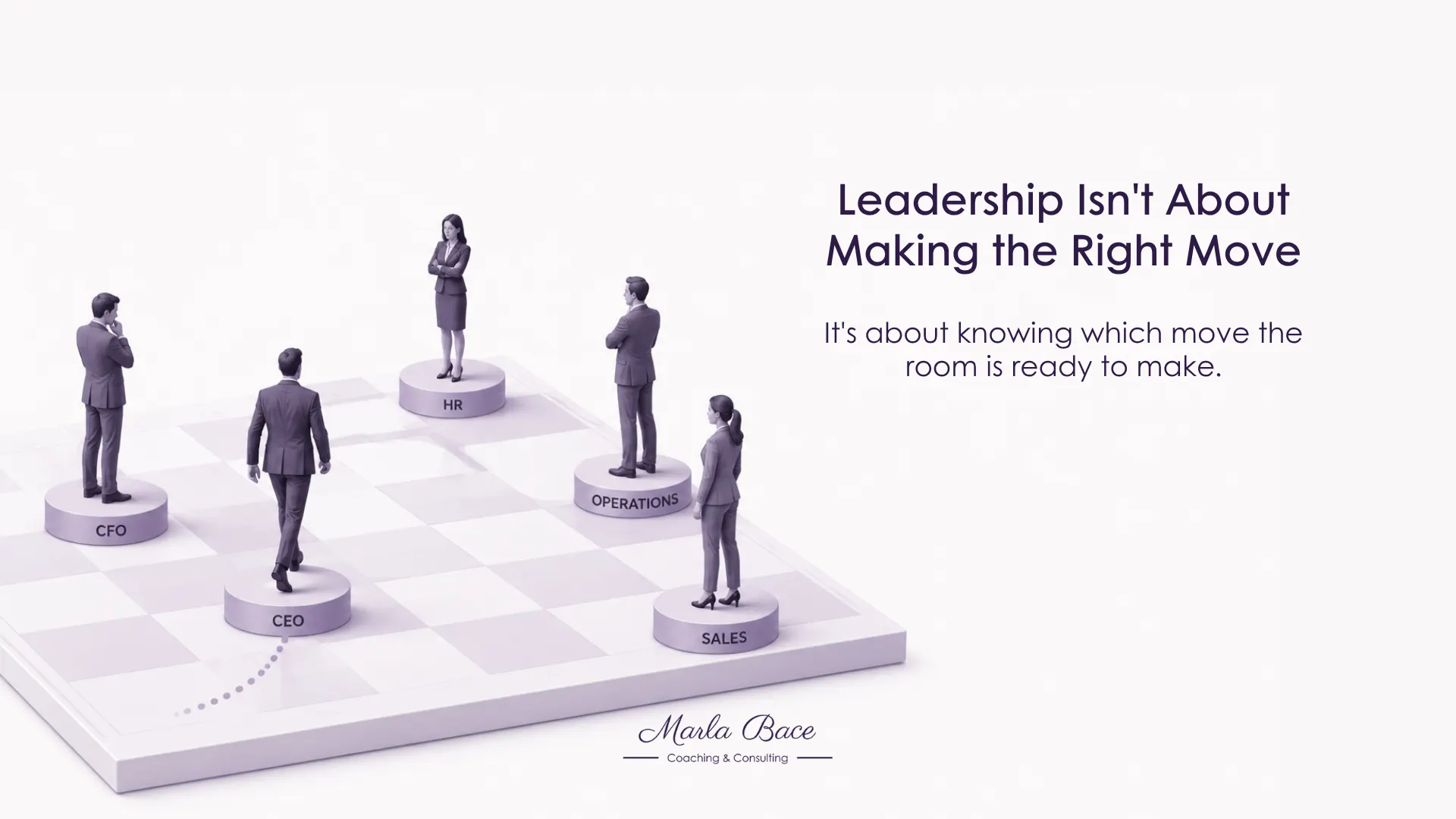
Often, the leader already has judgment, commercial instinct, presence, and pattern recognition. The problem is that the room has assigned them the wrong level. They are being treated as a highly capable executor when they are operating with enterprise-level judgment.
That is not a confidence gap. It is a power dynamics gap. More specifically, it is an accurate authority problem: your contribution is real, but the room is not assigning it the right weight.
Why Confidence vs Power Dynamics Gets Confused
“Be more confident” sounds helpful because it is easy to understand. It places the solution within the individual: stand taller, speak up sooner, stop second-guessing, believe in your value, take up more space.
There are moments when that is exactly the work.
But confidence coaching addresses internal narrative and self-belief. It does not automatically address how others in your organization read, frame, borrow, dilute, or weigh your capability.
You may believe in your recommendation and still have it dismissed until someone else repeats it.
You can speak clearly and still be positioned as tactical.
It’s also possible to be prepared, thoughtful, and commercially sound, and still find that others treat your contribution as input rather than authority.
That is where sophisticated leaders often get trapped. They assume the next level will come from better performance, cleaner communication, or more visible confidence. But the room is not always evaluating performance. Sometimes the room is protecting hierarchy, preserving a narrative, avoiding risk, or benefiting from keeping you useful without making you powerful.
A confidence problem asks, “Why don’t I trust myself in this room?”
A power dynamics problem asks, “Why is this room not accurately recognizing the value, authority, or strategic weight of what I am bringing?”
Those two questions lead to different work. One strengthens the leader’s internal authority. The other changes how the leader reads the environment, frames their contribution, and stops allowing the organization to miscast them.
You cannot self-improve your way out of a room that has already decided to under-level you. You have to see the assignment first.
Who Is This Article Really For?
This is not primarily for someone new to leadership who is learning to speak up for the first time.
This is for the senior manager who keeps being invited into the hard work but not the shaping conversation.
It is for the director whose judgment is used in private but not credited in public.
It also speaks to the executive whose role has expanded but whose decision rights have not.
You’ll recognise it if you’re the high-capacity operator who is constantly described as “invaluable” while remaining outside the room where authority, succession, budget, or strategy is actually decided.
Ultimately, it’s for the leader who has done the work.
They have built the competence, emotional intelligence, track record, and self-awareness. And still, the feedback sounds strangely generic: be more confident, be more strategic, speak up more, take up more space.
The frustration is not that the feedback is always false. The frustration is that it is incomplete. It notices the symptom but misses the room.
That is the kind of misread that slowly erodes self-trust. Not because the leader lacks confidence, but because they keep being asked to fix themselves inside a dynamic that has not been accurately named.
If you have ever had the experience of knowing your read is right while watching the room assign more authority to someone with less insight, this is the problem I am naming.
What a Confidence Problem Actually Looks Like
A true confidence problem usually has an internal pattern.
You hesitate before speaking, even when the room is open.
Visibility feels exposing, so you avoid it.
Your instinct is to soften your ideas before anyone has challenged them.
You may also over-explain because you are trying to prove you belong.
Later, you leave the meeting knowing exactly what you should have said once the moment has passed.
The room may be available to you, but you do not fully enter it.
When confidence is the issue, the primary block is often your relationship to visibility, authority, risk, or self-trust. There may be a fear of being wrong, a fear of being judged, an old pattern of waiting for permission, or a habit of staying useful instead of becoming visible.
A confidence gap often says, “I am not sure I belong here.”
A power dynamics gap says, “I know I belong here, but something about how this room operates keeps translating my judgment into something smaller.”
That difference matters. One asks for inner strengthening. The other asks for a more accurate read of the room.
What a Power Dynamics Problem Looks Like
When Confidence Isn’t the Problem
A power dynamics problem often feels maddening because, from the outside, you may appear confident.
You show up prepared.
You consistently deliver.
Your communication is clear.
You follow through.
You also understand the business, the stakeholders, and the implications of the decisions being made..
And still, something does not move.
The Signs Your Authority Is Being Misread
Leaders praise your work but rarely elevate it.
They hear your recommendations but do not act on them.
They rely on your judgment while giving someone else the credit.
As a result, your role gets bigger while your decision weight stays the same. Leaders trust you with complexity, but not always trusted with authority.
This is where a capable leader starts to feel the quiet distortion: I know I am good. I know I am seeing something real. So why does the room keep treating my contribution as support rather than leadership?
That is not always because you lack confidence. Sometimes it is because you have not been taught to read the room at the level of power actually operating.
This is where confidence vs power dynamics becomes an essential distinction. Speaking with conviction does not guarantee that leaders will recognise your authority if the organisation continues to frame your contribution through an outdated role or perception.
How Power Dynamics Shape Leadership Influence
Power dynamics are not always loud. They are rarely announced. They show up in the micro-patterns: who gets heard first, whose concern changes the decision, who can name risk without being labeled difficult, whose version of the idea becomes the accepted version, who is invited before the meeting, and who is asked to clean up after the decision has already been made.
At senior levels, quality is the floor. The question is whether leaders frame your work as enterprise judgment or absorbed as excellent execution.
That difference affects advancement.
It affects promotion narratives.
It also influences whether decision-makers see you as ready for the next level or simply dependable at the current one.
The outcome shapes whether others understand your executive presence as authority or translated as intensity, helpfulness, competence, or support.
This is the cost of being misread: you can become indispensable and still not become influential.
What Does This Look Like in a Real Room
A director walks into a leadership meeting with a strong recommendation. The analysis is right. The timing is right. The business case is solid. But the proposal quietly disrupts a senior leader whose team currently controls the process. That leader does not reject the idea directly. Instead, they ask for more data, widen the conversation, and praise the work while slowing the decision.
From the outside, the feedback sounds familiar: be more confident, sharpen your executive presence, make the recommendation more clearly. But the real issue is not hesitation. It is that the room is protecting authority before it evaluates the idea.
That is the kind of dynamic situational intelligence helps you read. The move is not to push harder. The move is to recognize what is being protected, reposition the recommendation, and make it easier for the room to assign your judgment the weight it actually deserves.
How Do Situational Intelligence and Self-Awareness Help You Read the Real Issue?
Self-Awareness Helps You Read Yourself
This is where situational intelligence and self-awareness become more useful than generic confidence advice.
Self-awareness helps you read yourself. It asks:
Am I holding back?
Am I over-explaining?
Have I been trying to earn permission?
Do I keep shrinking my point of view before anyone else has responded?
Am I confusing discomfort with danger?
Situational Intelligence Helps You Read the Room
Situational intelligence helps you read the environment. It asks: What is being rewarded here? Who has formal authority? Who has informal influence? What topics create defensiveness? Which decisions are already politically loaded? Where does the organization say it wants a strategy but continues to reward execution?
You need both.
Without self-awareness, you may blame the room for a pattern that is actually yours to strengthen. Without situational intelligence, you may blame yourself for a pattern the room keeps creating.
Why Accurate Diagnosis Changes the Intervention
This is where my work is different from generic confidence coaching. I am not only listening for what the leader says about themselves. I am listening for the room underneath the story: who benefits from the current pattern, what role the organisation has assigned the leader, where the stated feedback does not match the actual results, and where the organization is asking them to carry complexity without granting authority.
That read changes the intervention.
This is also where my advisory lens is different. I am not applying a generic framework to a leadership symptom. I am reading the hidden logic of the room: where leaders protect authority, others borrow credibility,the organisation uses the leader primarily for execution, and where the stated issue is not the actual one. That level of discernment matters because the wrong diagnosis can keep a capable leader self-correcting inside a dynamic that was never theirs to carry alone.
Building Accurate Authority
If the issue is internal, the work is to strengthen self-trust and visibility.
When the issue is environmental, the work is to understand power, positioning, timing, and influence.
If both are happening, the work is to separate them clearly enough that the leader stops carrying the whole situation as a personal failing.
That is accurate authority: knowing what is yours to strengthen, what belongs to the room, and how to make your judgment land at the level it actually deserves.
Confidence vs Power Dynamics: 5 Questions to Diagnose the Real Problem
Do I Hold Back Even When the Room Is Open to Me?
If the answer is yes, you may be dealing with confidence, self-trust, or visibility. You may have access, but you are not using it to its full potential. You may be waiting too long, qualifying your thinking too much, or minimizing your point before anyone else has responded.
Do I Speak Clearly, But the Room Does Not Assign Weight to What I Say?
If the answer is yes, you may be dealing with positioning or power dynamics. The issue may not be absence. The issue may be a category. The room may categorize your contribution as tactical, helpful, or operational, even though it is actually strategic.
Does My Work Travel Upward Without My Authority Traveling With It?
This is a critical signal. If your thinking moves through the organization but your name, role, or decision weight does not, you may be watching your judgment extracted without your authority being elevated.
Am I Being Asked to Solve Problems I Am Not Given the Authority to Prevent?
This often happens to high-capacity leaders. They are pulled into crisis, ambiguity, stakeholder cleanup, or execution rescue, but not into the earlier conversations where priorities, expectations, and trade-offs are set.
Does the Feedback I Receive Match the Actual Level of My Contribution?
If the feedback feels vague, repetitive, or disconnected from the results you are producing, you may not be getting developmental feedback. You may be getting a signal about how you are currently positioned.
Why Is Correctly Naming the Problem the Intervention?
The wrong intervention does not just waste time. It can change the story you tell yourself about your own leadership.
If you have a power dynamics problem and treat it like a confidence problem, you may start believing the issue is your hesitation, tone, presence, polish, or self-belief. So you work harder on yourself.
You prepare more.
At the same time, you monitor your language.
It often leads you to try to appear steadier, sharper, warmer, clearer, more executive, less emotional, more visible, and less intense.
Eventually, you become exhausted from trying to perfect the version of you that the room still has not learned how to value correctly.
It can stall advancement because your work is visible, but your authority is not.
The result can also be a weaker promotion case because you are seen as essential to execution rather than ready for broader enterprise leadership.
Over time, it can make your executive presence look inconsistent because you are calibrating yourself to a room that keeps moving the standard. That is how high-capacity leaders become indispensable without becoming properly leveled.
And it can drain the very judgment that made you valuable in the first place.
The real shift begins when you stop asking, “What is wrong with me?” and start asking, “What is the actual dynamic I am operating inside?”
That question moves the work from self-correction to discernment. It allows you to see whether you need to strengthen your voice, reposition your value, change your communication strategy, renegotiate authority, or stop trying to win influence in a room that benefits from keeping you useful but not powerful.
Being useful can keep you employed. It does not always make you powerful. And if you are not careful, the organization will keep rewarding your usefulness while delaying your authority.
Why Correctly Diagnosing Confidence vs Power Dynamics Changes Everything
If the issue is confidence, the work begins with self-trust. You practice speaking earlier.
Then you stop outsourcing authority.
Over time, you learn to tolerate visibility.
That process strengthens your ability to hold a point of view without needing immediate validation.
If the issue is power dynamics, the work is more strategic.
Start by identifying the real players.
Then map formal and informal authority.
Finally, examine who shapes perception, who resists change, whose agreement matters, and whose anxiety quietly controls the room.
Then you recode the way your contribution lands.
That may mean naming the business consequences earlier. It may mean moving from detail to decision.
Sometimes it means changing who hears the recommendation first.
In other situations, it means refusing to let your work be framed as cleanup when it is, in fact, strategic judgment.
This is where an outside perspective matters. When you are inside the system, you can be too close to see the assignment you have been given. You may keep trying to improve your performance when the real issue is how the room has learned to use you.
My advisory work helps leaders separate those threads: what is internal, what is relational, what is structural, and which move restores accurate authority without creating unnecessary drama.
What If You Are Dealing With Both?
Many leaders are.
Power dynamics problems can erode confidence over time. If you have spent years being under-recognized, interrupted, minimized, over-relied on, or treated as less strategic than you are, it is natural to start questioning yourself.
That does not mean the original problem was a lack of confidence. It means the system trained you to doubt your own reading.
You may need to rebuild trust in yourself, but not because you were wrong to begin with.
In some cases, you’ll need to reclaim your voice, but not because you never had one.
The next step may be to become more precise, direct, and strategically visible, but not because you lack value.
That is a different kind of leadership work. It is not about becoming louder. It is about becoming harder to misread.
What Is the Real Question Senior Leaders Should Be Asking?
The real question is not, “Am I confident enough?”
The better question is: “Is the room accurately reading my level, value, and authority?”
If the answer is no, then more confidence may help, but it will not be enough. You need to understand the dynamics. You need to see what is being rewarded, what is being resisted, what is being protected, and what role you have been unconsciously assigned.
Then you can decide how to move. Not from performance. Nor is it caused by over-explaining. Not from trying to prove that you belong. From discernment.
Because the goal is not to sound more confident, the goal is to lead from a place where your judgment is received, weighed, credited, and acted on at the level it deserves.
That is accurate authority.
It is the point where self-awareness stops becoming endless self-correction and starts becoming strategic clarity about what the room is actually doing.
Once you understand confidence vs power dynamics, you stop investing in solutions that only address the symptoms. You can focus instead on building genuine leadership influence by strengthening either your internal confidence or your external positioning—whichever is actually limiting your progress.
Need a More Accurate Read on the Room?
Start with the 15-minute playbook if you need to tell the difference between a confidence issue and a room-level authority problem before you spend another quarter trying to fix the wrong thing.
The playbook helps you slow the situation down and read it more cleanly: what is internal, what is relational, what is structural, and where your authority is being diluted, borrowed, or underweighted.
If the pattern runs deeper, the next step is a 30-minute strategy session with me. We look at the actual room, not the abstract issue: who has power, what is being protected, how your contribution is being categorized, and what move would restore more accurate authority.
Understanding confidence vs power dynamics is more than an exercise in self-awareness. It ensures you’re solving the right problem. When you know whether the obstacle is internal confidence or external positioning, you can focus your energy where it will have the greatest impact on your leadership influence.
The goal is not generic encouragement. The goal is diagnostic clarity strong enough to change your next move.
Frequently Asked Questions
A confidence problem is primarily internal. It affects how much you trust yourself, how often you speak up, and how willing you are to be visible. A power dynamics problem is relational and organizational. It affects how others read, weigh, credit, or act on your contribution.
If you are holding back even when the room is available to you, confidence coaching may help. If you are speaking clearly, delivering strong work, and still being under-recognized, misread, or kept outside decision authority, you may need help with positioning, influence, and power dynamics.
Because confidence is an easy explanation, it places the issue on the individual rather than requiring the organization, manager, or room dynamics to be examined. For capable leaders, the more accurate issue may be authority: the gap between the level of contribution they make and the level of authority the room assigns to it.
It can look like being heard but not acted on, praised but not promoted, relied on but not credited, or included in execution but excluded from strategic decisions. It can also look like your ideas are gaining traction only after someone with more authority repeats them.