Why Am I Delivering Results—But Still Not Being Seen at the Next Level?
Strategic leadership perception is shaped by how others interpret your thinking, influence, and judgment—not just the results you deliver. Many senior managers and directors assume that consistently performing at a high level will naturally position them for larger opportunities. Yet leaders are often promoted based on how they are perceived, not simply on what they accomplish. When someone is still being read as tactical, the issue is rarely capability—it is usually a gap between the value they create and how that value is being understood.
This is the moment where strong directors stall before VP—and where many VPs stop getting invited into earlier, more consequential conversations. Strategic leadership becomes essential at this stage for career growth and organisational impact.
You’re delivering.
The work keeps moving.
And you’re consistently the stabilizing force.
And yet the feedback lands:
“You need to show up more strategically.”
Which is confusing—because nothing is falling through the cracks.
So why is the organization still reading you at the tactical level?
The Strategic Leadership Perception Gap
At mid-level leadership, value looks like:
- Responsiveness
- Rapid problem-solving
- Being close to the work
But at senior levels, those same strengths start signaling something very different:
Operational dependency.
Instead, organizations begin trusting you operationally—but not strategically. Your value becomes tied to execution instead of enterprise direction.
That’s the exact point where advancement slows.
Why Tactical Visibility Weakens Strategic Leadership
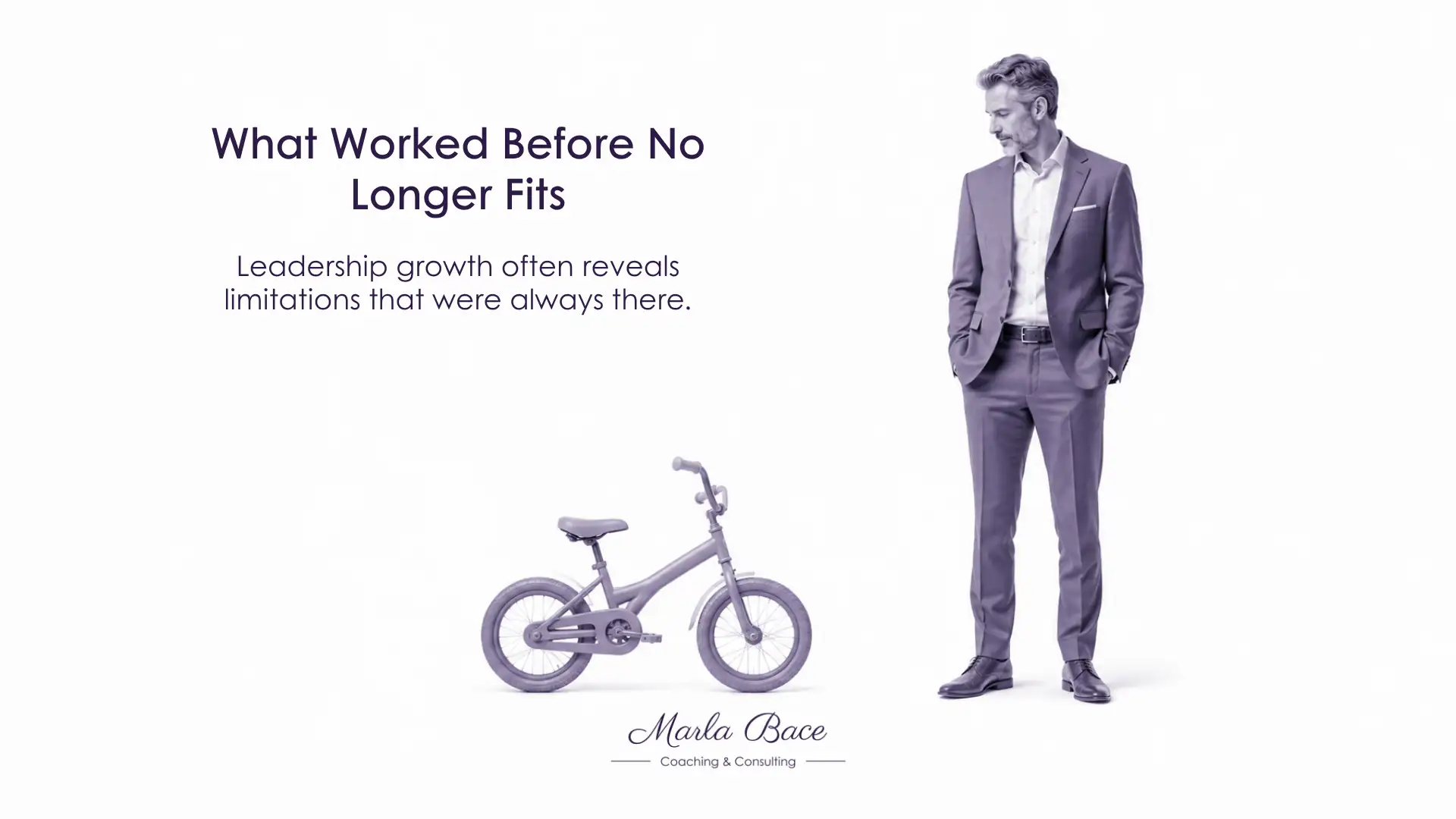
Involvement feels like leadership.
It feels like control.
It feels like things won’t move without you.
But at scale, this becomes something else entirely:
Organizational dependency.
And here’s the real career consequence:
The more everything depends on you, the harder it becomes for others to imagine you operating above it.
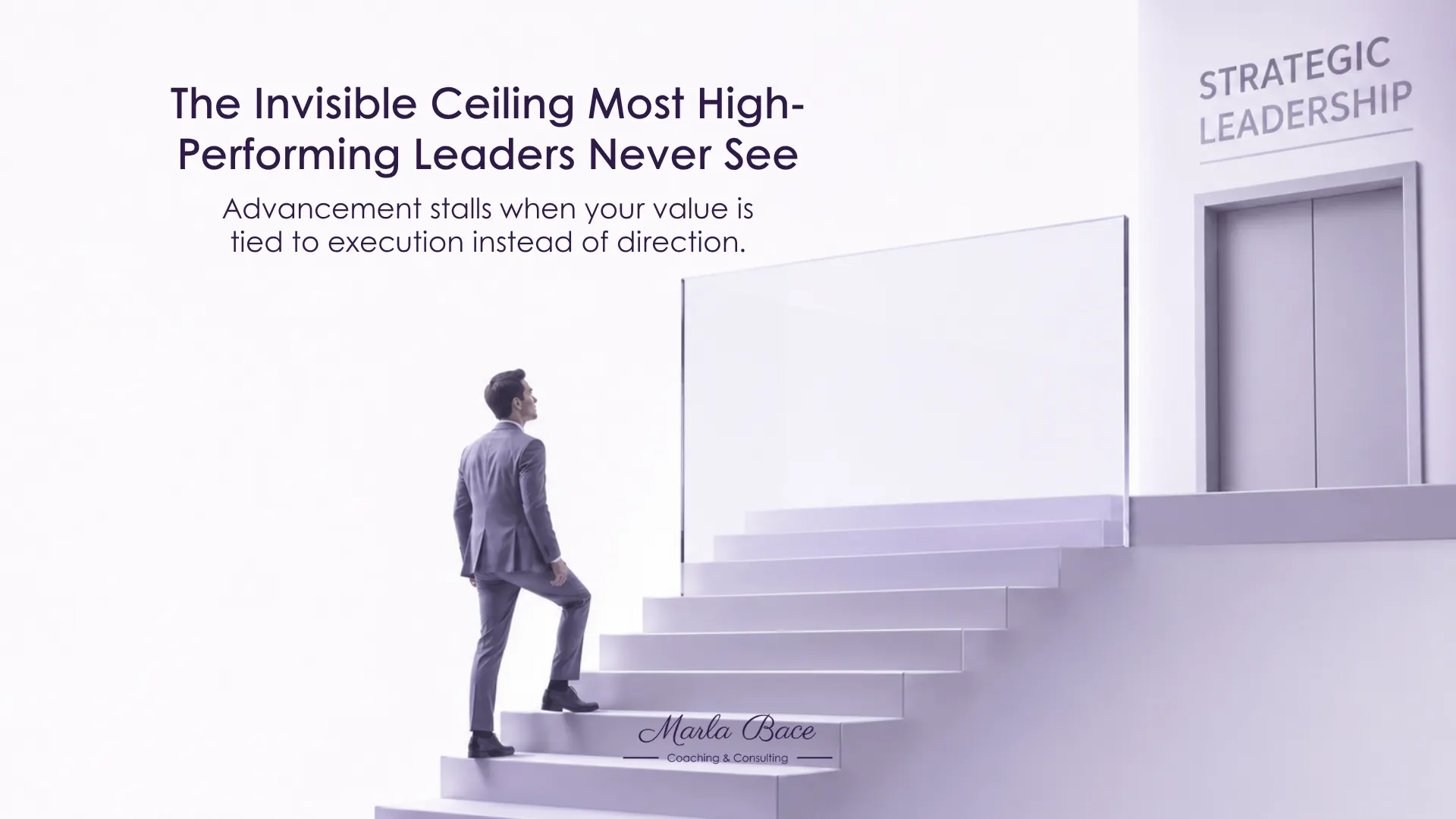
This is the invisible ceiling many leaders hit without realizing it.
If this is already familiar, you don’t need more content—you need to stay in this level of thinking.
→ Join Presence is Power
Strategic Leadership Is About Visibility, Not Busyness
At senior levels, you’re not being evaluated on how much you handle.
You’re being evaluated on how clearly you create direction.
At senior levels, leaders rise when they:
- Set priorities, not chase them
- Shape decisions, not fix execution
- Create clarity, not provide responsiveness
This is the shift from being central to execution to being trusted for direction—and it determines whether executives see you as scalable.
Why Strategic Leaders Still Get Read as Tactical
Because the organization is experiencing you at the level where your attention sits.
If you’re still deeply embedded in day-to-day decisions, executives begin experiencing you as:
- Reliable, but not strategic
- Indispensable, but not scalable
- Trusted, but not shaping direction
However, this isn’t a capability issue.
It’s a positional one.
And until your positioning shifts, your visibility doesn’t.
A Real Example: The Leader Who Was Seen as “Not Strategic Enough”
One of my clients—a respected, high-performing director—kept hearing the same feedback:
“We need you operating at a more strategic level.”
From his perspective, he was adding value everywhere:
- Stepping in to stabilize
- Preventing issues from escalating
- Keeping cross-functional work moving
But from the executive team’s perspective:
- He was too central to execution
- Not far enough above the work
- Not shaping enterprise direction
Once he repositioned his involvement—not by working harder, but by stepping out of decisions that didn’t require him—the business impact was immediate:
- Faster cross-functional decision velocity
- Clearer prioritization
- Stronger strategic credibility
- Inclusion in earlier executive conversations
He didn’t change his capability.
He changed how the organization experienced his role.
What Happens When Strategic Leadership Doesn’t Shift
This is where career ceilings show up.
High-performing leaders plateau when:
- The organization outgrows the level at which they still operate
- Their value is tied to responsiveness instead of direction
- They become central to execution instead of being scalable across teams
It feels like importance—
But it gets read as a limitation.
And until that repositioning happens, everything else stays the same:
Visibility doesn’t change.
Opportunities don’t shift.
Advancement stalls.
How Leaders Develop Strategic Leadership Presence
It doesn’t happen by thinking harder.
It doesn’t come from planning more.
And it’s rarely solved by adding structure.
But by shifting where they operate.
Less execution.
More direction.
Less fixing.
More decision-shaping.
Less involvement.
More enterprise-level clarity.
This is the transition that unlocks the next level of leadership visibility.
Where Does This Leaves You?
If you’ve been told to “be more strategic,” the issue isn’t competency.
You’re likely still being read at a level below what’s now expected of you.
For many high-performing leaders, this becomes the invisible ceiling they can’t quite understand—because no one ever says the shift out loud.
This is the moment where most leaders begin working with me:
Not because something is broken—
but because expectations changed, and visibility didn’t.
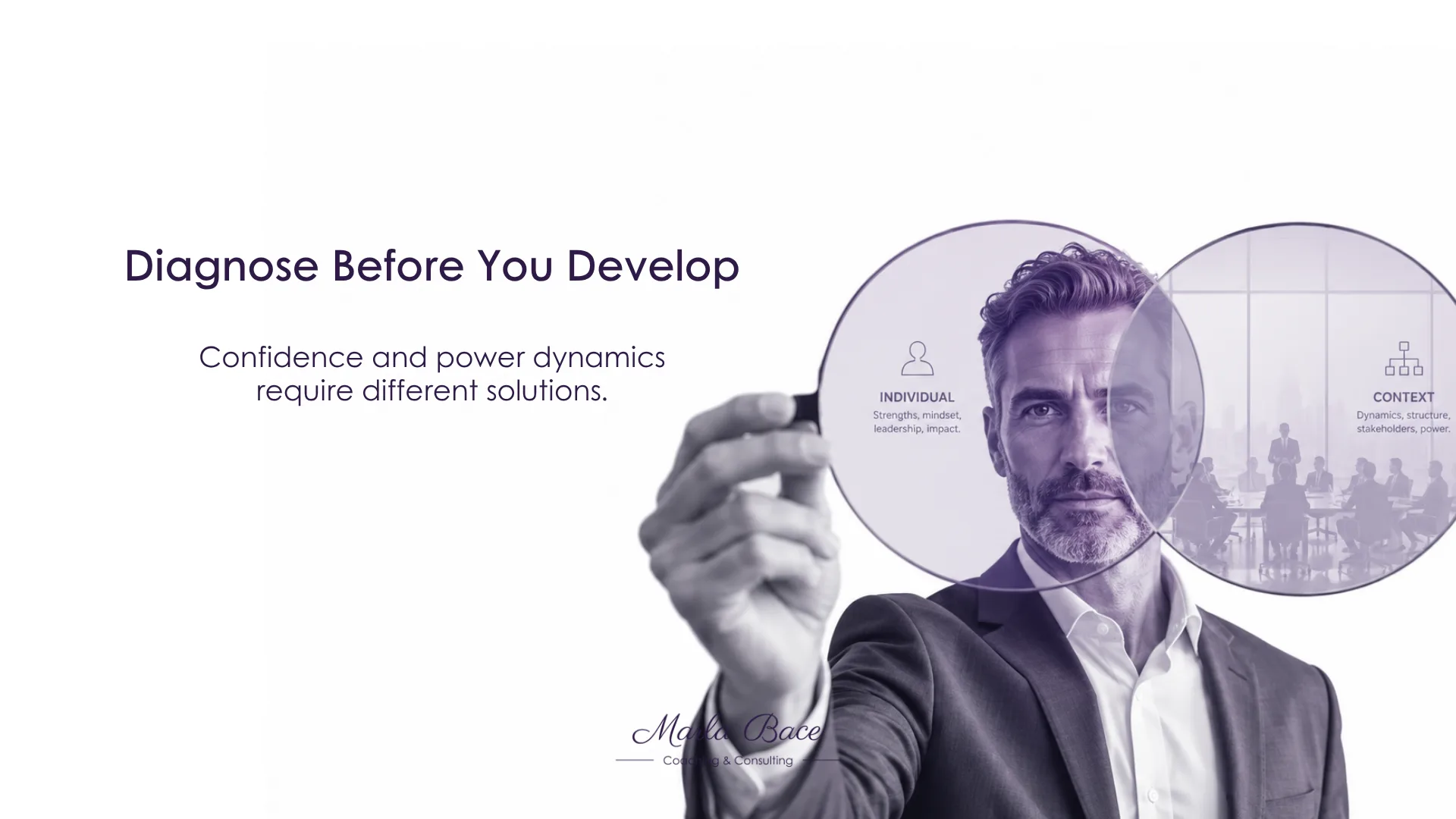
If you know you are capable of operating at a more strategic level but continue to be viewed primarily as an executor, a Clarity Review can help uncover why.
Together, we examine the perceptions, organizational dynamics, and leadership signals influencing how you are being read so you can position yourself for the opportunities you are ready for.
The Clarity Review was designed for exactly this transition.
A short, focused session to help you see what’s yours to carry—and what isn’t.
Executive FAQ: What Leaders Search When They Hit This Ceiling
Many leaders become known for execution, reliability, and problem-solving. While these are valuable strengths, they can unintentionally reinforce a perception that you are focused on delivery rather than broader strategic thinking.
Tactical leadership focuses on execution, implementation, and operational success. Strategic leadership involves shaping direction, anticipating future challenges, influencing decisions, and understanding how different parts of the organization connect.
Yes. High-performing leaders are often rewarded with more responsibility in the areas where they excel. Over time, this can make it harder for others to see them operating at a more strategic level.
Changing perception requires more than changing performance. Leaders often need to communicate their thinking differently, participate in broader organizational conversations, and demonstrate their ability to influence beyond their immediate area of responsibility.
Many directors focus on solving the problem in front of them rather than connecting that problem to larger organizational priorities. Executive leaders are often evaluated on how they interpret complexity, manage competing interests, and shape future direction.