Executive Takeaway
A shift in your boss’s confidence does not automatically mean your capability has declined. Often, the conditions surrounding the work have changed: the stakes are higher, scrutiny has increased, another stakeholder is involved, or your boss is carrying new pressure. Situational intelligence helps you distinguish an actual performance or trust problem from a change in visibility, risk, or expectations so you can recalibrate strategically rather than trying to prove yourself harder.
In This Article
• Why a relationship with your boss can feel different without one obvious incident
• Why strong performers often misdiagnose the shift as personal failure
• How to distinguish a trust or performance problem from changed conditions
• What an outdated understanding of your role looks like
• Which questions help identify what has changed
• How to increase visibility without becoming defensive
• How to update the operating agreement with your boss
• Why accurately naming the problem changes the response
• What situational intelligence contributes to the diagnosis
• Frequently asked questions about trust, scrutiny, and micromanagement
Executive Summary
- This article explores: The experience of sensing a subtle but meaningful shift with your boss even though no obvious mistake, conflict, or formal breakdown has occurred.
- In many cases, the underlying issue is: Not a simple performance problem. Pressure, visibility, risk, role expectations, or stakeholder dynamics may have changed around the work.
- The reason this matters: Misreading a situational shift as personal failure can lead to over-functioning, over-explaining, and trying to prove yourself inside an outdated understanding of the role.
- Situational intelligence makes it possible to: Separate performance from interpretation, trust from visibility, and actual capability from changing expectations or operating conditions.
- The next step is to: Identify what changed, clarify the level of visibility now required, ask questions about new risks and stakeholders, and update your understanding of how the role must be carried before attempting to repair your image.
Why does it feel like you’ve lost ground with your boss when nothing obvious happened?
It often feels this way because the shift did not occur through a single clear event. It happened through changed conditions. The pressure on your boss has increased. The work became more visible. Another stakeholder started paying attention. The business environment tightened. Your role expanded informally. The cost of surprise went up. In response, your boss began interacting with you differently before anyone clearly explained why.
Research from Google’s Project Aristotle found that high-performing teams depend heavily on psychological safety and trust, and shifts in pressure or visibility can subtly change how leaders interact with their teams—even when no obvious problem exists.
If it feels like you’ve lost ground with your boss, the first instinct is often to assume you’ve done something wrong.
That is what makes these situations so hard to interpret. If there had been a major mistake, a direct conflict, or a formal performance conversation, the problem would at least be named. But when the change is more ambient than explicit, accomplished professionals often fill in the blanks with self-criticism. They tell themselves they must be missing something obvious, losing their edge, or somehow underperforming without realizing it.
Sometimes that is true. More often, the relationship is responding to something bigger than personal capability. What I often notice first is that the boss is not always reacting to the person’s performance alone. They are reacting to new pressure, new visibility, or a new risk they have not yet translated into a clear conversation.
People frequently look for answers in language like:
- why does my boss seem off with me
- why is my manager suddenly checking everything
- why does it feel like my boss doesn’t trust me
- why am I getting more scrutiny at work
- why does my boss seem less confident in me
All of those questions point to the same hidden issue: the relationship may not have deteriorated so much as the conditions around the relationship have changed.
Why do strong performers think they’ve lost ground with their boss?
Strong performers usually build their careers by solving problems through competence. When something feels off, they work harder, tighten execution, and try to remove doubt through performance. That strategy works well in many situations, which is exactly why it becomes a trap in this one.
Many capable professionals become convinced they’ve lost ground with their boss even when the underlying issue is actually changing expectations.
The problem is that at more senior levels, work is not judged only on output. It is interpreted through pressure, power, stakeholder confidence, visibility, and risk. A professional can still be highly capable yet misaligned with the new conditions of the work. When that happens, more effort does not automatically restore trust. It may simply increase frustration because the person is trying to solve a changed contextual problem with a familiar performance-based response.
This is why generic advice like “be more confident” or “just keep proving yourself” often lands poorly with experienced professionals. They are already capable. They may already be proving themselves. What they may not yet see is that the scorecard changed, and nobody handed them the updated version. When that happens, the impulse to prove yourself harder can actually keep you operating inside the wrong map for too long.
Correctly naming the problem is not just insight. It is an intervention.
Have you actually lost ground with your boss or have expectations changed?
A real trust problem usually involves more than a changed tone or increased visibility. It tends to include evidence, fair or unfair, that your judgment is creating risk for someone above you.
That can look like:
- missed deadlines or avoidable surprises
- weak judgment under pressure
- repeated cleanup from others
- important stakeholders are being left out for too long
- poor visibility on work that leadership needs to track
- defensiveness when challenged
- strong execution in routine conditions, but weaker thinking when the environment changes
When this is the issue, the core concern is not just that your boss is paying more attention. The concern is that they no longer feel fully confident delegating risk to you.
Trust in leadership is rarely built on output alone. Research shows that confidence is influenced by predictability, judgment, communication, and a leader’s ability to manage uncertainty and risk.
Before assuming you’ve lost ground with your boss, look for evidence that trust has genuinely been damaged.
That is difficult but workable when clearly identified. The problem is that many professionals assume this is the story before they have enough evidence to support it. They internalize a personal failure narrative too quickly.
One of the clearest signs that the issue may not be purely about performance is this: the quality of your work has not obviously dropped, yet the level of scrutiny has still gone up. That is often a clue that the environment shifted around the work.
Why it can feel like you’ve lost ground with your boss when the situation has changed
A situational intelligence problem looks like a strong capability paired with an outdated map. You are still working well, but you are responding to an older version of the role, the relationship, or the political environment, while the people around you are reacting to a newer one.
This can happen in subtle ways:
- your boss now has more exposure from above and needs more visibility
- your work affects a broader decision than it used to
- a cross-functional stakeholder now has influence over the outcome
- the company is under pressure, so tolerance for ambiguity has dropped
- your independence is now being judged through a risk lens rather than an execution lens
- the role has become more strategic, but nobody has explicitly said so
- success now depends on protecting confidence and alignment, not just delivering output
As work becomes more visible and interconnected, professionals often need to shift from simply executing tasks to managing relationships, expectations, and changing organizational dynamics.
From the outside, this can look like a confidence problem, which is why so many capable people misread it from the inside. The feeling is personal, even when the shift is structural. They keep trying to improve themselves when the most urgent task is to identify the new playing field.
Situational intelligence helps you ask a different set of questions:
- What changed in the environment?
- Who is under more pressure now?
- What level of visibility is newly required?
- What is being protected?
- What version of the role am I still assuming is true?
Those questions move you beyond vague insecurity into strategic diagnosis.
What questions help you identify what is actually happening?
The fastest way to determine whether you are dealing with a performance issue or a situational shift is to ask sharper diagnostic questions.
1. What changed around the work, the team, or the stakes in the last 3 to 12 months?
Look beyond your own behavior. Has leadership changed? Perhaps the organization has entered a period of tighter finances or increased political pressure. Maybe your boss has inherited more accountability, or a new executive has started paying closer attention to this work. In some cases, the work itself has simply become more visible or more consequential.
If so, the shift in your boss’s behavior may be a response to changed conditions, not sudden doubt in your capability.
2. Has the standard for visibility changed, even if the standard for quality has not?
This happens often. The work is still good, but the environment now requires more documentation, tighter alignment, or earlier escalation. To the person doing the work, this can feel insulting. To leadership, it may feel necessary.
3. Is your boss reacting to risk, surprise, or optics more than to the quality of your output?
Many leaders intervene not because the work is poor, but because they cannot afford surprises. If the issue is risk management, the answer is not just “work harder.” It is “reduce ambiguity, increase line of sight, and communicate in a way that fits the current pressure.”
4. What version of your role are you still assuming is true?
This is often the hidden hinge in the whole situation. You may still be operating from an older agreement:
- I own this independently.
- Results matter more than process visibility.
- I only need to escalate major issues.
- My boss wants the finished answer, not the developing thinking.
- I am being measured primarily on execution.
Any of those assumptions may now be outdated.
5. What has your boss stopped saying directly?
Sometimes the most useful diagnostic clue is silence. A boss who once gave clean developmental feedback may now speak in shorthand, ask for more control, or avoid naming the real concern because they themselves are still sorting out the shift. That does not make the situation easier, but it does tell you that reading the room matters as much as listening to the words.
When nothing obvious is wrong, but the relationship has clearly changed
A senior professional had been strong in her role for years. She was experienced, self-assured, and highly competent. Her boss had long trusted her to run her area with minimal oversight. Then, gradually, the relationship changed. He started checking details he had never cared about before. He wanted more updates, more visibility, and more involvement in decisions she had once made independently – including weekly vendor calls and budget tradeoffs he had previously left entirely in her hands. Nothing dramatic had happened. There was no major mistake, no formal warning, and no direct statement that trust had changed.
She became convinced she had lost ground with her boss, when in reality the environment around the work had fundamentally changed.
Naturally, she began questioning herself. Was she slipping? Was he losing confidence in her? Had she missed some signal everyone else could, see?
What became clear, however, was that the environment around her had changed. What I noticed was that the increase in oversight was not random. It was tracking the rising exposure around the work, even though no one had named that change directly. The stakes in the work had risen. Her boss was under more pressure from above. The visibility requirements had changed, but no one had translated them into a new operating agreement. She was still working from the old map of the relationship. He was responding to the new risk of the role.
The breakthrough was not simply emotional reassurance. It was situational clarity. Once she could see that the issue was not just “my boss trusts me less,” but “the conditions around this work changed and neither of us has named it cleanly,” she could respond differently. She increased visibility without becoming defensive, asked better questions about expectations, and repositioned herself in line with the new level of scrutiny. The problem shifted from personal to strategic.
That is often the turning point. When you can accurately name the shift, you stop fighting ghosts.
What should you do when it feels like you’ve lost ground with your boss?
The best response is to clarify the situation before you rush to repair your image. If you misname the problem, you choose the wrong intervention.
If you’ve lost ground with your boss, your response should depend on whether the issue is trust, visibility, or changing operating conditions.
A stronger response usually includes five moves.
1. Stop making it only about your worth
Your internal reaction is real, but it is not the full picture. Start with the external question: what changed in pressure, visibility, risk, or expectations around this work?
2. Increase visibility without becoming apologetic
If the environment now requires tighter communication, meet that requirement strategically.
Examples:
- “I’ll send a tighter update cadence on this so you have line of sight before key decisions.”
- “Given the visibility on this work, I’ll surface tradeoffs earlier rather than waiting until the recommendation is fully formed.”
That signals judgment, not insecurity.
3. Ask questions that surface the real operating conditions
Instead of asking, “Is something wrong?” ask:
- “Has something changed in how this work needs to be carried or reviewed?”
- “What level of visibility would be most useful for me right now?”
- “Are there new stakeholders or risks I should be accounting for more explicitly?”
- “What would help you feel fully confident delegating this?”
These questions bring the hidden variables into the open.
This is one of the core principles of managing up effectively: understanding what your leader needs in the current environment and adjusting your communication accordingly.
4. Update your understanding of the role
Even if your title has not changed, your job may have. You may need to think less like an executor and more like a translator, risk manager, cross-functional operator, or owner of stakeholder confidence.
5. Watch what restores clarity and what does not
If better visibility, stronger framing, and clearer conversations improve the dynamic, the issue was likely situational and workable. If the boss remains erratic, overly controlling, or opaque despite your efforts, then the issue may be more entrenched than a simple contextual shift.
Situational intelligence helps with both. It helps you distinguish between a changed system and a genuinely dysfunctional pattern.
The real leadership move when you’ve lost ground with your boss
The real leadership move is to read the changed conditions before you rush to repair your image. If your boss feels harder to read, less confident, or more controlling than before, do not assume your value has disappeared overnight. Start by identifying what may have shifted in pressure, accountability, visibility, or role expectations.
Sometimes it feels like you’ve lost ground with your boss because the role has changed faster than your understanding of it.
Situational intelligence is not about becoming political in a false way. It is about recognizing that work changes in meaning as context changes. The people who navigate this best are not always the most confident in the abstract. They are the ones who can see the new reality earlier, ask better questions, and respond to the actual conditions rather than the story their anxiety wants to tell them.
If you have the sense that something changed without warning, that instinct may be accurate. The next task is to identify what changed, for whom, and what that now requires of you.
What Should You Do When You Cannot Tell What Changed?
Feeling as though you’ve lost ground with your boss is often the first signal that something in the environment has shifted, even if nobody has named it yet.
The 15-Minute Pre-Meeting Playbook can help you prepare for the next conversation by mapping the people, pressures, risks, and questions that need to be addressed.
Download the 15-Minute Pre-Meeting Playbook to prepare for your next important conversation with your boss.
When you are too close to the relationship to see what changed, book a Strategic Leadership Conversation. My claircognizant insight helps distinguish trust from visibility, performance from interpretation, and a workable situational shift from a more entrenched problem.
Frequently Asked Questions
It often means one of two things: either your boss is responding to a real concern about judgment, visibility, or risk, or the environment around your work has changed and they are reacting to that shift without naming it clearly. The key is to separate a true performance issue from a changed context issue.
Micromanagement is not always about poor performance. It can also happen when the stakes rise, scrutiny increases, leadership changes, or your boss feels less able to absorb surprise. In those cases, the behavior may reflect pressure or risk, not a sudden collapse in your capability.
A trust problem usually includes patterns like poor judgment, surprises, avoidable cleanup, or inconsistency under pressure. A visibility problem usually appears when the work remains strong but your boss now needs more updates, earlier escalation, or tighter alignment because the environment changed.
Ask questions tied to expectations and operating conditions, not just reassurance. For example: “Has something changed in how this work needs to be carried?” “What level of visibility would be most useful?” or “Are there new risks or stakeholders I should be accounting for more explicitly?”
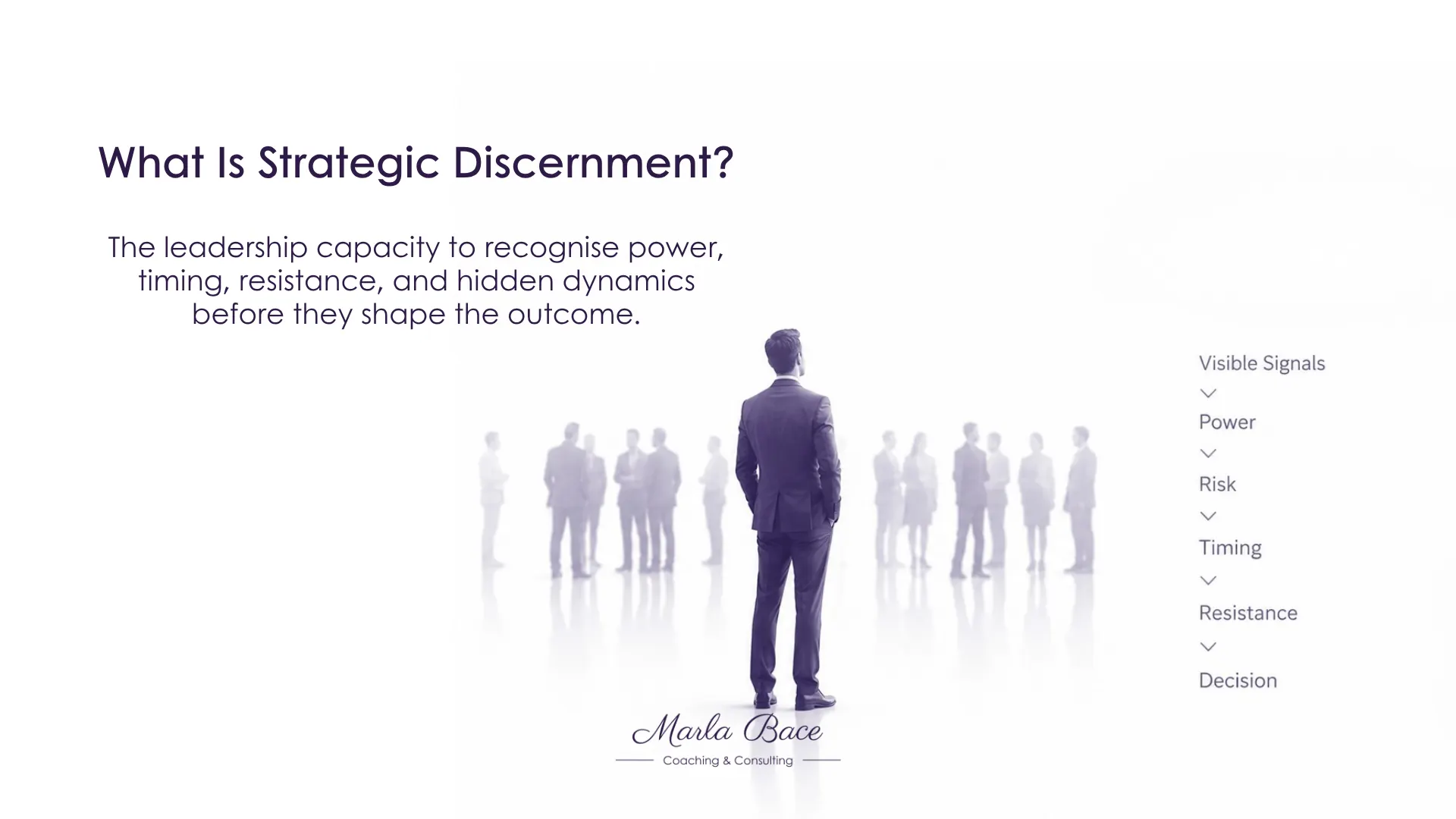
Situational intelligence in leadership is the ability to read changes in power, pressure, timing, expectations, and stakeholder dynamics, then adjust your communication and decisions accordingly. It helps capable professionals respond to the real situation rather than an outdated version of it.