Leadership responsibility rarely increases in a dramatic moment. Leaders carrying organizational tension often face gradual shifts and accumulating challenges rather than sudden change.
More often, it accumulates gradually.
A leader begins solving problems that sit slightly outside their role. They step into difficult conversations others prefer to avoid. They absorb friction between teams because someone needs to stabilize the situation.
At first, these behaviors are recognized as leadership strengths.
They demonstrate maturity. They show reliability. They help the organization continue moving forward.
Over time, however, a different pattern can begin to emerge.
The leader is no longer just solving problems.
They are carrying tension that does not fully belong to them.
The tension of unresolved disagreements between departments.
The tension of unclear ownership.
The tension of expectations that have never been clearly articulated.
Instead of simply making decisions, the leader begins holding the emotional weight of the system.
This moment is subtle, and many capable leaders miss it.
They assume the tension they feel is simply part of being responsible, but recognizing early signs of overextension can prevent burnout and improve effectiveness.
But carrying everyone else’s tension is rarely the role leadership actually requires.
Understanding why this happens is an important step toward restoring clarity and balance in leadership judgment.
Why Do Capable Leaders Begin Absorbing Organizational Tension?
High-performing leaders often develop their careers by being the person who can stabilize difficult situations. Are you the one everyone turns to?
When a project stalls, they step in.
When two teams struggle to coordinate, they facilitate the conversation.
When uncertainty spreads through an organization, they provide direction.
These behaviors are valuable. They build trust and establish credibility.
However, the same instincts that help leaders grow early in their careers can create challenges as their responsibilities increase.
Leaders begin interpreting every unresolved tension as something they must personally resolve.
Instead of allowing disagreements to surface naturally among stakeholders, they try to smooth interactions before they become uncomfortable.
Instead of allowing teams to clarify ownership, they absorb the uncertainty themselves.
The result is that tension moves upward through the organization and collects around the leader.
What originally looked like strong leadership gradually becomes emotional overextension.
The leader is not just guiding the organization; they are also shaping it.
They are carrying it.
If this is already familiar, you don’t need more content—you need to stay in this level of thinking.
→ Join Presence is Power
Why Does Leadership Responsibility Magnify Emotional Pressure?
As leadership responsibility grows, decisions affect more people.
Projects involve multiple departments.
Timelines become more interconnected.
Strategic choices influence long-term direction.
Because of this expanded impact, leaders often become more aware of the emotional signals within the organization.
They notice hesitation in meetings.
They recognize when two executives interpret a decision differently.
They sense when uncertainty begins spreading through a team.
This awareness is part of mature leadership.
But awareness alone does not require absorption.
Many leaders make a subtle mistake at this stage.
They interpret emotional signals as problems they must personally contain.
Instead of allowing tension to surface and resolve through appropriate channels, they internalize the pressure.
This often happens quietly. Internally.
The leader does not announce that they are carrying the organization’s tension.
They begin thinking about it constantly.
Why Do Leaders Sometimes Feel Responsible for Problems They Did Not Create?
Another reason leaders carry excess tension is the belief that responsibility means owning every problem.
Leaders naturally feel accountable for the environment they influence.
When friction appears, they ask themselves a familiar question.
What could I have done differently?
This question reflects strong self-awareness. It helps leaders improve over time.
However, when applied too broadly, it produces an unintended consequence.
Leaders begin taking responsibility for structural rather than personal problems.
Two departments disagree about priorities.
A leader may assume the disagreement reflects a communication failure on their part.
A senior executive introduces a shifting set of expectations.
The leader may assume they have failed to interpret those expectations correctly.
Over time, this pattern becomes exhausting.
Not because the leader lacks capability, but because they are attempting to solve issues that one individual cannot solve.
Distinguishing between personal responsibility and structural tension is one of the most important leadership skills developed at senior levels. This clarity can help leaders feel more balanced and less overwhelmed by emotional burden.
What Happens When Leaders Carry Too Much Organizational Tension?
When leaders carry tension that belongs elsewhere in the organization, several patterns often emerge.
Decisions begin taking longer. See my last blog external link
Leaders attempt to anticipate every reaction before acting. They try to ensure that no stakeholder feels unsettled.
Conversations become heavier.
Meetings that should focus on direction become extended discussions about interpretation and reassurance.
Energy becomes fragmented.
Instead of directing momentum toward progress, leaders spend increasing time managing emotional signals across the system.
Eventually, the leader may begin questioning themselves.
Why does this role feel heavier than expected?
Why do decisions feel more complicated than they should?
The answer is rarely capability.
More often, it reflects an invisible accumulation of responsibility that was never meant to be borne by a single person.
How Do Experienced Leaders Recognize When Organizational Tension Is Not Theirs to Carry?
Experienced leaders eventually develop a useful form of discernment.
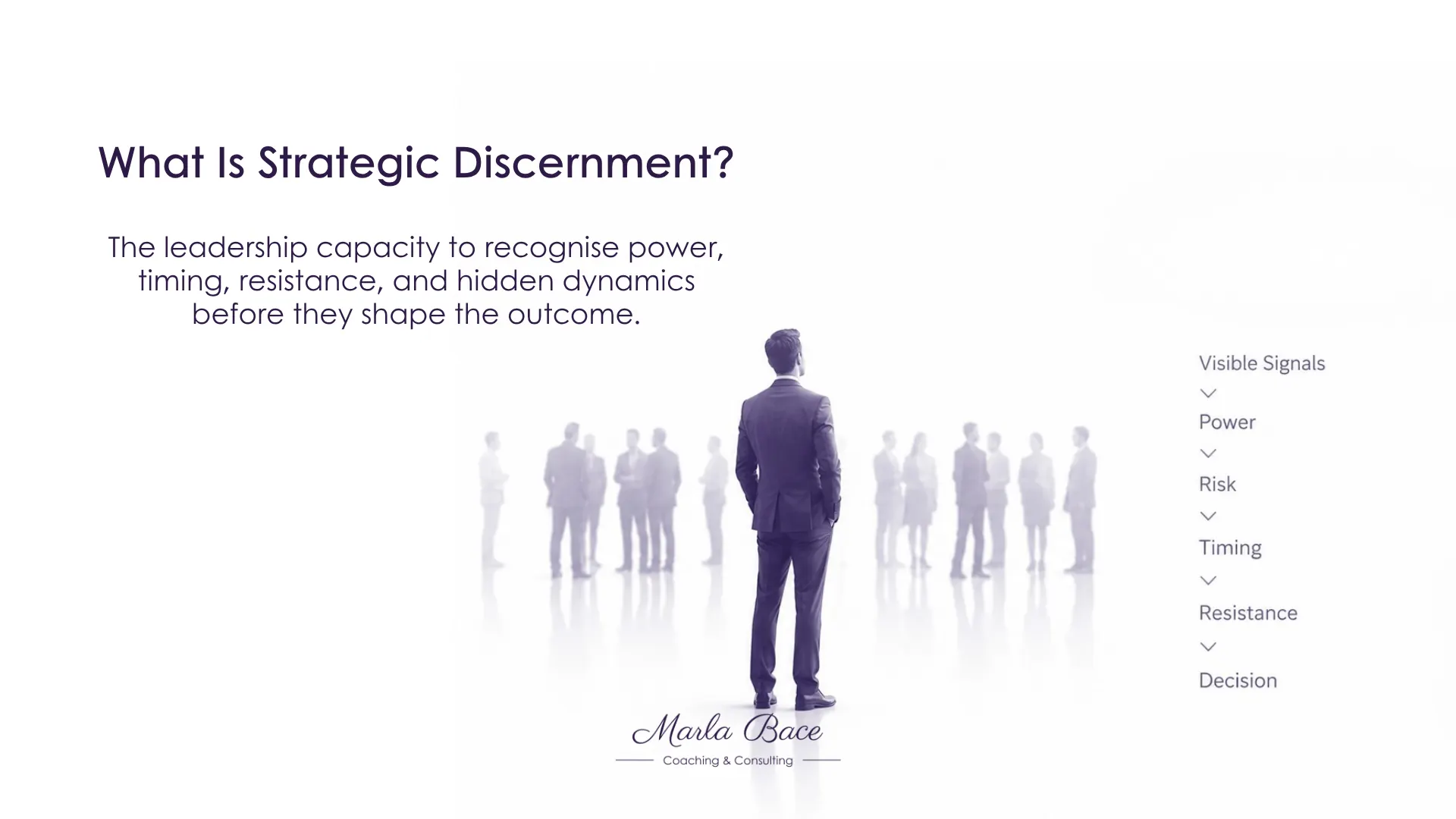
They learn to distinguish between tension that requires leadership action and tension that belongs within the system.
Not every disagreement requires intervention.
Not every uncomfortable conversation needs to be mediated.
Not every uncertainty must be resolved immediately.
In healthy organizations, some tension is productive. It can inspire leaders to see organizational challenges as opportunities to clarify priorities and engage teams more directly, fostering a sense of purpose.
It clarifies priorities.
It reveals differences in perspective.
It forces teams to engage directly with the decisions that affect them.
When leaders absorb that tension too quickly, they unintentionally prevent the organization from developing its own problem-solving capacity.
Recognizing this distinction allows leaders to shift their role.
Instead of carrying tension, they begin creating conditions in which it can be appropriately resolved by implementing clear delegation and responsibility-sharing practices.
How Can Leaders Support the System Without Carrying It?
Supporting the system requires a different kind of leadership presence.
Instead of stepping into every tension point, leaders begin asking clarifying questions. This approach can help leaders feel more confident and in control, knowing they are guiding effectively without overextending themselves.
Where does ownership actually sit?
Who should be part of resolving this issue?
What information is needed before the conversation can move forward?
These questions do not remove the leader from the situation.
They place responsibility back where it belongs.
This approach strengthens the organization rather than weakening it.
Teams learn to address challenges directly instead of relying on a leader to stabilize every interaction.
The leader remains engaged but no longer absorbs the emotional burden of every unresolved issue.
Why Do Leaders Sometimes Confuse Strength With Endurance?
Another reason leaders carry excess tension is cultural.
Many leadership environments quietly reward endurance.
The leader who handles the most pressure is seen as the strongest.
The executive who absorbs constant tension without visible reaction is considered resilient.
While resilience is valuable, endurance alone is not a sustainable leadership strategy. This is why “burnout” has become a hot topic of podcasts and articles.
Strong leaders do not simply absorb pressure indefinitely.
They learn to interpret where pressure originates and where it should properly reside within the organization.
This distinction allows them to remain steady without becoming overwhelmed.
Research from the Center for Creative Leadership highlights that sustainable leadership effectiveness depends heavily on a leader’s ability to manage emotional boundaries and prevent organizational stress from becoming personal overload.
You can explore that research here:
https://www.ccl.org/articles/leading-effectively-articles/managing-stress-leaders/
The lesson is simple but powerful.
Leadership strength is not measured by how much tension a leader can carry.
It is measured by how clearly, they understand where that tension belongs.
Closing Reflection
Leadership inevitably involves pressure.
Important decisions create uncertainty.
Strategic changes create resistance.
Responsibility exposes leaders to competing expectations.
Feeling tension in those environments is normal.
Carrying all of it is not.
The most effective leaders eventually learn that their role is not to absorb the entire emotional weight of the organization.
Their role is to interpret signals, clarify direction, and ensure that responsibility sits in the right places.
When that balance is restored, leadership becomes lighter without becoming weaker.
Decisions move more cleanly.
Teams take greater ownership.
And leaders regain the clarity needed to guide the organization forward.
If you’re carrying tension that isn’t yours, thinking about it won’t resolve it.
This is where most leaders don’t need more input—they need clarity.
A short, focused session to help you see what’s yours to carry—and what isn’t.
Common Questions Leaders Ask at This Stage
Leaders often associate responsibility with ownership of all outcomes. As their role expands, they begin interpreting structural or systemic issues as personal failures, leading to unnecessary emotional load.
Organizational tension refers to unresolved disagreements, unclear ownership, or competing priorities within a system. It is not always a problem to eliminate, but a signal that requires appropriate distribution of responsibility.
Leaders can reduce emotional overload by clarifying ownership, asking better questions, and allowing teams to resolve tension directly instead of intervening prematurely.
Pressure is normal in leadership roles, but persistent overwhelm often indicates that leaders are carrying responsibilities or emotional weight that does not belong to them.