Executive Takeaway
Navigating power dynamics is not the same as playing politics. Playing politics asks you to manipulate perception for advantage. Navigating power dynamics asks you to understand how authority, influence, risk, timing, and trust actually move inside the organization. For senior managers, directors, and executives who refuse to become performative or political, the alternative is not innocence. It is situational intelligence. It is the ability to read the room without losing yourself inside it.
In This Article
- Why the false choice between naivety and politics keeps capable leaders under-influential
- Who this article is really for
- What power dynamics actually are, without the cynicism
- Why pretending power does not exist costs advancement, authority, and credibility
- Which three layers senior leaders need to read before they can navigate effectively
- How situational intelligence helps leaders work with real dynamics without becoming political
- What principled navigation looks like in meetings, relationships, and positioning decisions
- Why capable leaders need positioning capital more than political capital
- How Marla’s advisory lens helps leaders read the actual room
- How the 15-minute playbook and 30-minute strategy session support a more accurate read
- Frequently asked questions about power dynamics, office politics, and influence without authority
Executive Summary
- What this article addresses: How senior leaders can navigate organizational power dynamics without becoming political, performative, or manipulative.
- What is often happening: A capable leader sees that power dynamics are shaping decisions, access, and influence, but they do not want to play games. So they either disengage from the dynamics or try to outwork them.
- Why this matters: Refusing to read power does not make a leader more ethical. It often makes them easier to misread, easier to use, and easier to exclude from consequential decisions.
- What situational intelligence helps you do: Read formal authority, informal influence, actual priorities, hidden risk, room readiness, and where decisions are really being shaped.
- What principled navigation protects: Your integrity, your positioning, your credibility, and your ability to be heard at the level you actually operate.
- What positioning capital builds: Earned trust, clear judgment, credible timing, and influence that does not require you to perform a version of leadership that does not belong to you.
- What to do next: Stop asking whether you should ignore power dynamics or play politics. Learn to read the room cleanly enough to move with integrity and consequence.
How Do Senior Leaders Navigate Power Dynamics Without Playing Politics?
Navigating power dynamics is not the same as playing politics.
Most capable leaders collapse those two ideas, then feel forced into a false choice: stay naive about how the organization actually works, or become strategic in a way that feels like self-betrayal.
That false binary is why so many senior professionals either stay under-influential or become someone they do not fully respect.
A third path exists.
It is not innocence, not manipulation. It’s principled navigation built on discernment, situational intelligence, and positioning capital.
The leader who can read power dynamics without being consumed by them builds a different kind of influence. They do not pretend the room is cleaner than it is. They also do not let the room make them smaller, sharper, or less aligned than they are.
That is the distinction most leadership advice misses.
Who Is This Article Really For?
This is not primarily for someone who wants to win office politics or learn how to manage perception at any cost.
This is for the senior manager who knows certain conversations happen before the official meeting and is tired of pretending the formal agenda is the whole story.
It is for the director who keeps bringing sound judgment into rooms where the decision is already being shaped by alliances, fear, ownership, or someone else’s unspoken authority.
Also for the executive who understands that influence matters but refuses to become slippery, performative, or politically transactional in order to have it.
And for the high-capacity leader who has been praised for integrity, trusted with hard work, and pulled into complex situations, yet still finds that people with less insight sometimes move the room more effectively because they understand how power travels.
The frustration is not that the leader lacks intelligence. The frustration is that intelligence alone does not protect a leader from being out-positioned.
If you have ever thought, “I see what is happening here, but I do not want to play this game,” this is the article I am writing for you.
If you have ever watched a weaker idea move because it was better positioned inside the room, this is the problem I am naming.
What Is the False Choice Between Naivety and Politics?
Most professionals default to one of two positions.
The first is naivety. They tell themselves the work will speak for itself. The best idea will win. The right people will notice. The organization will reward integrity, effort, and good judgment because those things are objectively valuable.
Sometimes that happens. Often, at senior levels, it does not happen automatically.
The second position is politics. They study the personalities, manage the optics, soften or sharpen themselves depending on the audience, and start making moves based less on truth and more on advantage.
That can work in the short term. It can also cost something a leader may not notice until much later: self-respect, clarity, trust, and the ability to know whether their influence still belongs to them.
Both approaches fail senior leaders for different reasons.
Naivety keeps you morally clean but strategically underpowered. Politics may make you more influential, but it can separate you from your own judgment if you use it as a substitute for discernment.
The third position is more demanding. It asks you to tell the truth about how power moves without letting that truth corrupt how you move.
That is not office politics. That is situational intelligence.
The real leadership task is not to avoid power. It is to stay clean while becoming accurate about how power is operating.
What Are Power Dynamics, Really?
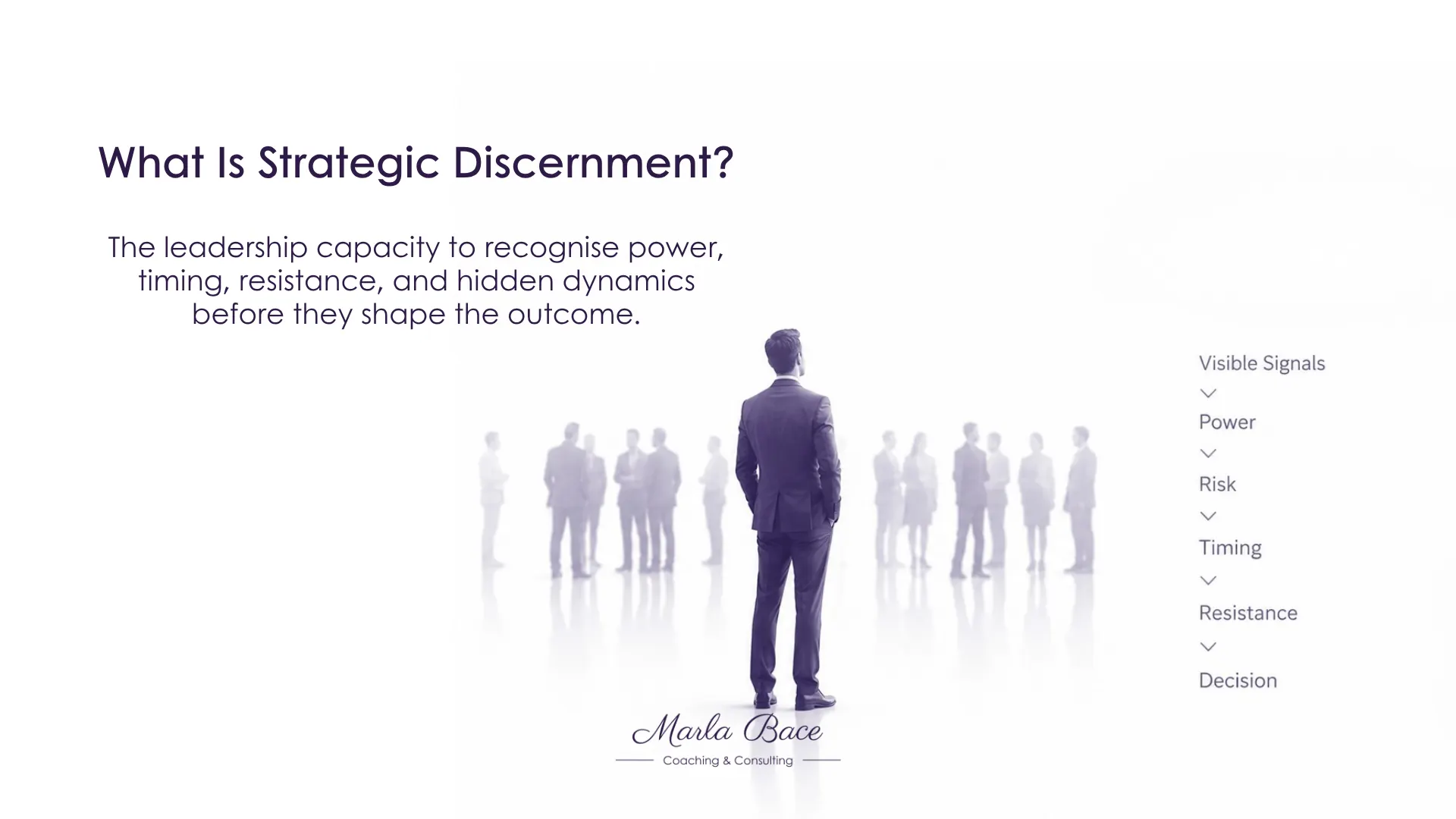
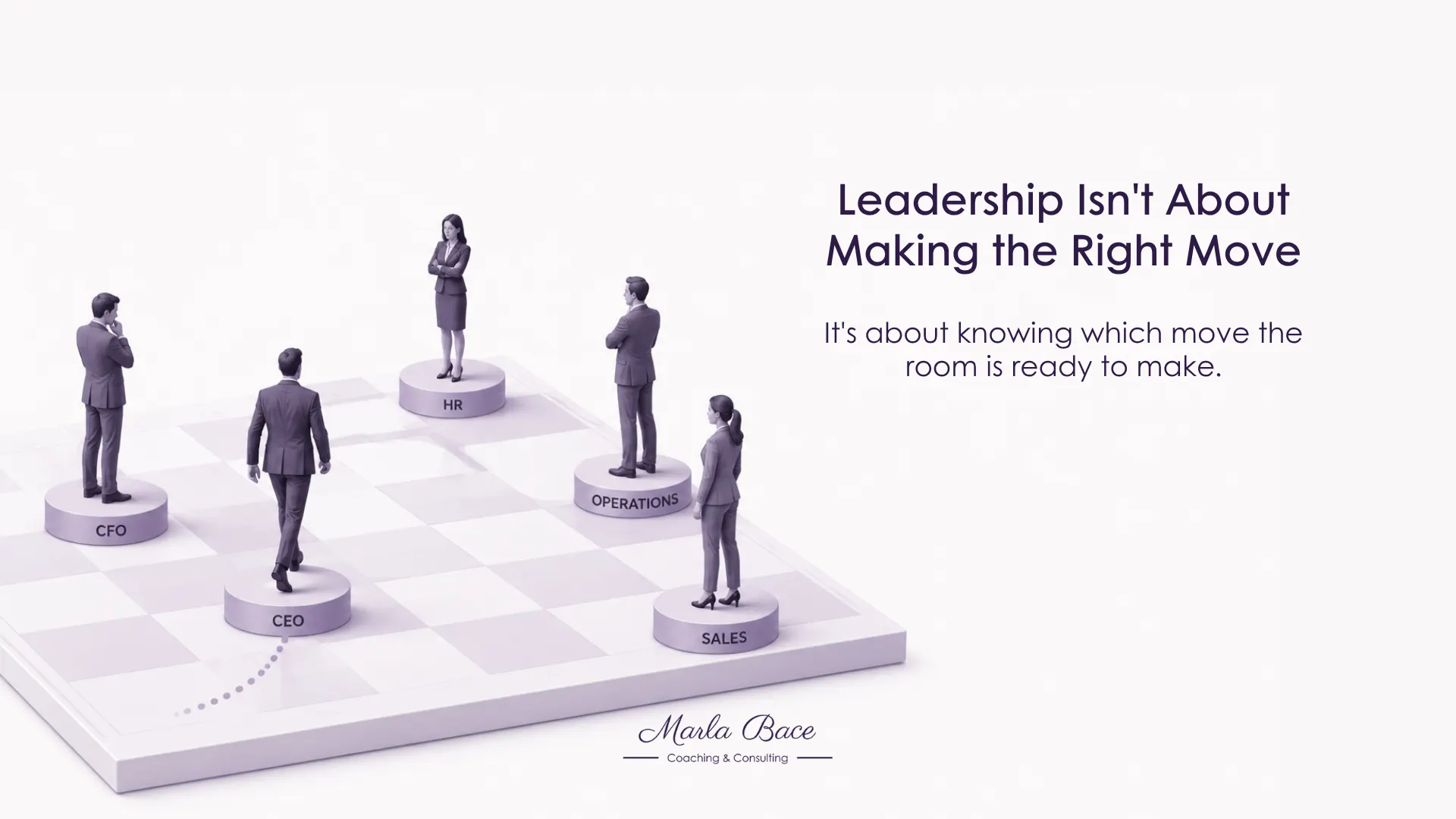
Power dynamics are the visible and invisible forces that determine whose voice carries weight, whose risk gets protected, whose ideas move forward, whose discomfort slows a decision, and whose authority shapes the room even when it is not named.
They include formal authority: titles, reporting lines, decision rights, budget control, and organizational structure.
They also include informal authority: trust, history, proximity, loyalty, fear, expertise, tenure, social capital, and the person everyone looks to before they speak honestly.
Understanding those dynamics is not a character flaw. It is a leadership competency.
A leader who refuses to read power dynamics may feel more principled, but they are often operating with partial information. They may misread silence as agreement, questions as curiosity, delay as diligence, agreement as commitment, and access as influence.
That misread has consequences.
It can keep a capable leader outside the real decision path or it can weaken their promotion narrative because they are seen as productive but not influential. This can lead them to spend months trying to improve communication when the real issue is power, timing, or who needs to be brought in before the room can move.
Pretending power does not exist does not make it disappear. It usually means someone else is using it while you are still trying to be chosen by the quality of your work alone.
A leader who refuses to read those forces does not stay above them. They usually end up being shaped by them without realizing it.
What Does This Look Like in a Real Leadership Moment?
A director has a recommendation that would simplify a broken process and reduce risk across the business. The analysis is strong. The operational benefit is clear. The senior team says they want efficiency, accountability, and fewer fire drills.
But the recommendation also removes informal control from a long-tenured leader whose team has quietly become the gatekeeper. In the meeting, that leader does not openly object. They compliment the work, ask for more stakeholder input, and suggest “one more pass” before moving forward.
A naive read says the room needs more data.
A political read says the director should flatter the gatekeeper, trade favors, or work around them.
A discerning read says something cleaner: the room is not evaluating the recommendation yet. It is protecting the person whose authority will be reduced if the recommendation moves forward.
That read changes the move. The leader does not need to become political. They need to address the actual dynamic. That might mean reframing the recommendation around risk ownership, speaking with the gatekeeper before the next meeting, clarifying what will be protected in the transition, or naming the trade-off without making anyone defensive.
Power dynamics are not always the enemy. Unread power dynamics are.
The issue was never whether the recommendation was right. The issue was that the room had to resolve a threat to informal authority before it could evaluate the idea on its merits.
What Three Things Do You Need to Read Before You Navigate Effectively?
Before a senior leader can navigate power dynamics with integrity, they need to read three layers of the situation.
Most leaders get stuck because they only read the org chart and the stated agenda, then wonder why the room keeps moving according to a different logic.
Who Has Formal Authority?
Formal authority is the visible structure: who owns the decision, who controls the budget, who approves the hire, who signs off, who has the title, and who is accountable on paper.
This layer matters, but it is rarely the whole story. Many leaders make the mistake of assuming the person with formal authority is the only person they need to influence. At senior levels, that is often too simple.
Who Has Informal Influence?
Informal influence is often where the real room lives. It may sit with a founder, a long-tenured operator, a trusted advisor, a senior assistant, a board member, a peer who shapes perception, or the person everyone checks with before they disagree.
If you do not know who influences the decision-maker, you may be communicating to the title while missing the actual source of movement or resistance.
What Are the Real Priorities Versus the Stated Priorities?
Organizations often say one thing and reward another. They may say they want innovation while rewarding control or they may say they want strategy while rewarding responsiveness. There might be times they may say they want accountability while protecting the person who avoids it.
Situational intelligence means reading both: the stated priority and the operating priority. The stated priority tells you what the organization wants to believe about itself. The operating priority tells you what it will actually protect under pressure.
Most people only operate on the first layer. Senior leaders who build real influence learn to read all three.
How Do You Work With Power Dynamics Without Becoming Someone Else?
Working with power dynamics does not require you to become more political. It requires you to become more conscious.
There is a difference between managing perception and making reality legible.
Managing perception is performative. It asks, “How do I get them to see me the way I want to be seen?”
Making reality legible is leadership. It asks, “What does this room need to understand in order to make a better decision, and how do I frame that truth so it can be received?”
That is the move.
In a meeting, it may mean naming the implication before the recommendation: “The bigger issue is not the process itself. It is that the current process leaves no clear owner for the risk.”
In a relationship, it may mean understanding the other person’s exposure before assuming they are simply resistant: “I do not think this is about disagreement. I think this creates visibility around a decision no one has wanted to own.”
In a positioning decision, it may mean refusing to accept expanded responsibility without matching authority: “I can lead this work, but if I am accountable for the outcome, I need to be involved before the direction is already set.”
None of that is game-playing. It is clean leadership in a room that has consequences.
The leader does not become someone else. They become harder to misuse.
The goal is not to become more calculating. It is to become less naive about consequence.
What Do Capable Leaders Build Instead of Political Capital?
Capable leaders do not need political capital in the manipulative sense. They need positioning capital.
Positioning capital is the trust, credibility, clarity, and decision weight that accumulates when people experience your judgment as accurate, useful, and appropriately timed.
Political capital often depends on favors, alliances, perception management, and strategic loyalty. Positioning capital is built differently. It grows when your read of the room proves reliable and it grows when you name the actual issue without creating unnecessary drama. When your recommendations connect to business consequence, not personal preference, it grows. It grows when you protect the work, the relationship, and the truth at the same time.
That kind of influence is slower to build than playing the room. It is also more durable.
It also changes what the room begins to trust. Not just your output, but your read, your timing, and your ability to move difficult truth without creating unnecessary fallout.
Positioning capital means people begin to trust not just your work, but your read. They do not only see you as competent. They begin to see you as someone who understands what is happening and can help the organization move through it.
That is the shift senior leaders are often missing. They keep trying to be more visible when what they need is to become more legible at the right level.
Why Does This Matter for Influence Without Authority?
Influence without authority is not about persuading harder. It is about understanding what creates movement in a system where you do not control all the levers.
If you do not read the power dynamics, you may keep speaking to the person with the title while someone else shapes the decision. You may keep presenting the rational case while the room is protecting status or you may keep asking for alignment when the real issue is fear. You may keep waiting for permission from people who benefit from your contribution but do not intend to expand your authority.
This is where many high-capacity leaders get stuck. They are trusted with complexity, but not always granted decision weight or they are brought in when things are messy, but not always included when direction is being set. Some are praised for judgment, but still asked to operate inside a structure that limits the use of that judgment.
Power dynamics are not separate from career advancement. They shape who is seen as ready, who is treated as strategic, who gets access before decisions are made, and who is left to execute after the real conversation is over.
If you want to influence without authority, you have to understand where authority actually lives.
If you cannot see where authority really lives, you will keep trying to influence the visible room while the real room keeps making the decision elsewhere.
How Does Marla’s Advisory Lens Help Leaders Read the Room?
My work is not to teach leaders how to play politics. It is to help them read power cleanly enough that they do not have to.
I help leaders separate the surface conversation from the actual dynamic underneath it: who has formal authority, who holds informal influence, what is being protected, where the stated issue is not the real issue, and how the leader’s contribution is being categorized inside the room.
That read changes the intervention.
This is where my work differs from generic influence coaching. I am not helping leaders become more polished at managing impressions. I am helping them identify what is actually shaping the room, where power is traveling, what is being protected, and what move would increase influence without reducing integrity.
A generic approach might say, “Build relationships.” A more accurate read asks, “Which relationships actually shape the decision, and what does each person need to trust before they can move?”
A generic approach might say, “Communicate more strategically.” A more accurate read asks, “What is the room really reacting to, and what level does your language need to signal?”
A generic approach might say, “Do not get involved in politics.” A more accurate read asks, “What power dynamic are you avoiding because you do not want to compromise yourself, and what would principled navigation look like instead?”
The value is not a script. Scripts break when the room changes. The value is a cleaner read, strong enough to help a leader move with integrity and consequence.
Need a More Accurate Read on the Power Dynamics?
Start with the 15-minute playbook if you need to tell the difference between office politics and a real power dynamic before you spend another quarter trying to outwork a room you have not fully read.
The playbook helps you slow the situation down and see it more clearly: who has formal authority, who carries informal influence, what is being protected, where the stated priority differs from the operating priority, and how your own positioning is being shaped inside the system.
If the pattern runs deeper, the next step is a 30-minute strategy session with me. We look at the actual room, not the abstract leadership issue: who has power, how influence is really moving, what is making the room hard to shift, and what move would build positioning capital without compromising your integrity.
The goal is not generic encouragement. The goal is a cleaner read, strong enough to change your next move.
Frequently Asked Questions
You navigate office politics without compromising your integrity by refusing the false choice between naivety and game-playing. The work is to read power dynamics accurately, name what is actually shaping the room, and choose moves that protect both the truth and your position.
Office politics usually refers to perception management, alliances, advantage-seeking, or influence used for personal gain. Power dynamics are the real forces that shape authority, decision-making, access, risk, and credibility inside an organization. Understanding power dynamics is a leadership competency. Playing politics is one possible response to them, but it is not the only one. The distinction matters because a leader can reject politics and still need to understand power if they want to move anything consequential.
Senior leaders build influence without becoming political by developing positioning capital: earned trust, credible judgment, clear communication, strong timing, and the ability to name the real issue without unnecessary drama. This kind of influence is built through accuracy and consistency, not manipulation. Influence grows when the room experiences your judgment as accurate, your timing as sound, and your framing as useful under pressure.
You protect your leadership positioning by understanding how your contribution is being categorized, where your authority is clear or diluted, who influences the rooms you are trying to move, and whether you are being asked to carry responsibility without matching decision rights. Positioning is protected by reading the system before it defines you.